



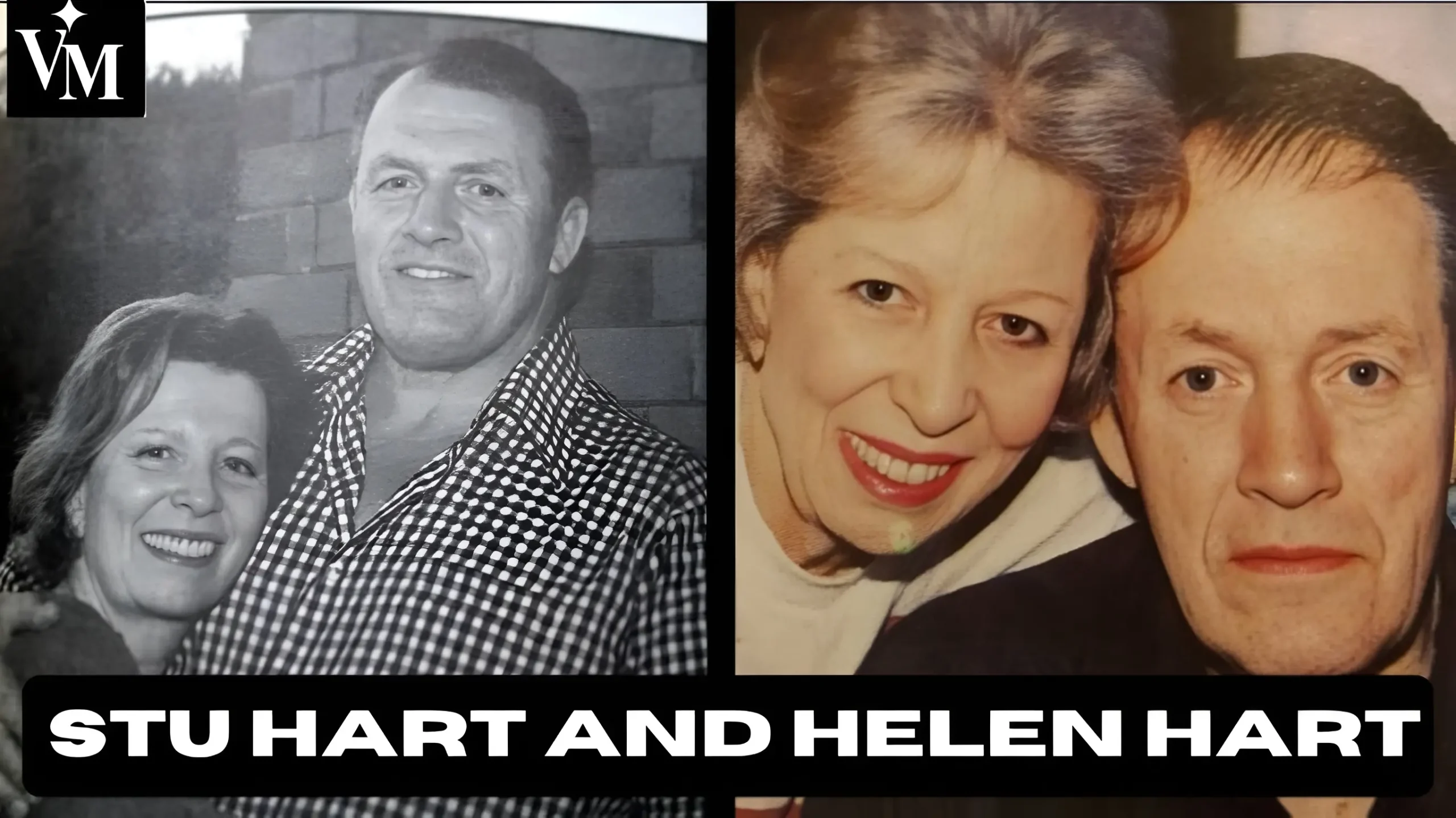
Professional wrestling has produced countless personalities throughout its storied history, but few couples have left an imprint as profound as Stu Hart and Helen Hart. Their partnership extended far beyond personal commitment; it represented a business vision that would transform wrestling from a regional spectacle into a globally recognized entertainment phenomenon. Stu Hart and Helen Hart worked together to establish what many consider the most influential wrestling family in the sport’s history. The Dungeon, their legendary training facility, became synonymous with technical excellence and professional development, while Helen Hart’s organizational contributions remained vital to the Hart family’s operations behind the scenes.
The story of Stu Hart and Helen Hart is fundamentally about vision, dedication, and innovation. When Stu Hart began his wrestling journey in the 1930s, the industry looked drastically different from its modern incarnation. Helen Hart stood beside him through transformation after transformation, providing the stability and business acumen that allowed their family to prosper when others faltered. Together, they created an environment where technical wrestling excellence became the standard rather than the exception.
Who Were Stu Hart and Helen Hart? Understanding Their Individual Contributions
Stu Hart: The Wrestling Technician and Promoter
Stu Hart emerged as a professional wrestler during the Great Depression, a period when athletic entertainment represented one of the few viable career paths for working-class athletes. Born in 1915, Stu Hart possessed an intuitive understanding of wrestling mechanics that transcended typical training methods. He didn’t merely perform holds; he understood the physics and psychology behind them, knowledge he would eventually systematize into a coaching methodology that produced generations of elite wrestlers.
What distinguished Stu Hart was his transition from wrestler to promoter and trainer. While many performers of his era remained content with in-ring competition, Stu Hart envisioned a larger framework—a wrestling territory that could compete with established promotions while maintaining technical standards. His relentless pursuit of wrestling excellence became a personal mission that extended throughout his career.
Stu Hart’s wrestling style emphasized technical proficiency over sensationalism. He taught submission wrestling, chain wrestling, and scientific wrestling techniques when many promotions prioritized showmanship over credibility. This philosophical commitment meant that wrestlers trained in Stu Hart’s system possessed skills that translated across different wrestling organizations and styles.
Helen Hart: The Business Architect and Family Steward
Helen Hart’s role in the Hart family operation deserves examination as a foundational element often underappreciated in wrestling history discussions. While Stu Hart represented the creative and athletic vision, Helen Hart provided the organizational infrastructure that transformed vision into sustained success. She managed the business operations, coordinated scheduling, and ensured that the Hart family’s various ventures operated with financial prudence and strategic planning.
Helen Hart’s contributions extended into managing family relationships during periods of significant growth and complexity. Building a professional wrestling family requires more than athletic talent; it necessitates careful attention to training progression, competitive opportunities, and family dynamics. Helen Hart navigated these challenges with the diplomatic skill and organizational acumen that allowed multiple Hart family members to flourish in professional wrestling simultaneously.
The partnership between Stu Hart and Helen Hart exemplified complementary strengths. Where Stu Hart innovated athletically and creatively, Helen Hart ensured sustainable operations. This balance proved essential to the Hart family’s longevity and influence.
The Dungeon: Wrestling’s Most Prestigious Training Institution
The Dungeon represents Stu Hart’s most tangible legacy to professional wrestling. Located in the basement of their Calgary home, this training facility became legendary throughout the wrestling world as an institution where technical wrestlers developed their craft. Stu Hart and Helen Hart provided the environment where wrestling excellence became non-negotiable.
Training in the Dungeon meant subjecting oneself to rigorous technical instruction combined with legitimate athletic conditioning. Stu Hart believed that wrestlers must understand the mechanics of holds, escapes, and reversals at a fundamental level before performing in promotional settings. This commitment to technical authenticity distinguished the Dungeon from more entertainment-focused training schools.
Wrestlers who emerged from the Dungeon carried Stu Hart’s technical fingerprints throughout their careers. The emphasis on chain wrestling—using sequential technical moves that flowed logically from one position to another—became identifiable in wrestlers trained within these walls. International wrestling observers frequently noted that Hart-trained wrestlers possessed a distinctive technical sophistication that elevated match quality regardless of the promotion or opponent.
The Dungeon’s existence represented Stu Hart’s conviction that wrestling required systematic instruction rather than informal apprenticeship. Helen Hart’s support for maintaining this facility, despite its obvious financial costs and facility demands, illustrated the family’s commitment to wrestling development beyond immediate profit generation.
Establishing Stampede Wrestling: Regional Success and International Recognition
Stu Hart and Helen Hart built Stampede Wrestling from a regional operation into a promotion that generated significant revenue and earned respect from other wrestling territories. Stampede Wrestling became Stu Hart’s creative outlet while generating the financial resources that sustained the Hart family’s various endeavors.
Stampede Wrestling distinguished itself through technical wrestling emphasis and legitimate competition appearance. While other North American promotions leaned into entertainment theater, Stampede Wrestling wrestlers competed with an intensity and technical proficiency that suggested the outcome remained uncertain. Stu Hart cultivated an aesthetic that made wrestling appear credible even to audiences skeptical of professional wrestling’s legitimate nature.
The promotion’s success attracted wrestlers seeking to develop their technical capabilities. International wrestlers, particularly from Japan and other wrestling territories, recognized Stampede Wrestling as a destination for serious technical improvement. This reputation elevated the promotion’s prestige and created touring opportunities that provided additional revenue while spreading Stu Hart’s influence throughout wrestling communities worldwide.
Helen Hart’s business management ensured that Stampede Wrestling operated with financial responsibility despite the unpredictability inherent in entertainment promotion. Her organizational contributions allowed the promotion to weather industry downturns and competitive challenges that eliminated numerous regional promotions during the same period.
The Hart Family’s Wrestling Dynasty: Translating Vision into Generational Success
The most compelling aspect of Stu Hart and Helen Hart’s legacy involves the remarkable number of family members who achieved prominence in professional wrestling. Their children and grandchildren developed into wrestlers, trainers, and wrestling personalities recognized throughout the global wrestling community.
This multi-generational success resulted from systematic training and exposure opportunities. Stu Hart and Helen Hart didn’t simply encourage their children to pursue wrestling; they created the infrastructure and opportunities necessary for wrestling development. The Dungeon provided professional-quality training while Stampede Wrestling offered competitive platforms where family members could develop in-ring abilities.
Key Elements of the Hart Family System:
- Comprehensive technical training accessible through family connections
- Performance opportunities in Stampede Wrestling before pursuing broader wrestling territories
- Mentorship from Stu Hart combining technical instruction with psychological preparation
- Helen Hart’s business guidance regarding career management and decision-making
- Family support structure that provided financial stability during development phases
This systematic approach created competitive advantages that translated into wrestling success across multiple family generations. The Hart family didn’t merely produce individual wrestlers; they established a wrestling methodology and business approach that became identifiable throughout the industry.
Case Study: The Impact on International Wrestling Evolution
The influence of Stu Hart and Helen Hart extended far beyond North American wrestling. Japanese wrestling promoters actively recruited wrestlers trained in Stu Hart’s technical system, recognizing the quality enhancement such training provided. The cross-pollination between Stampede Wrestling and Japanese wrestling organizations created unique developmental pathways that accelerated technical wrestling advancement globally.
This international exchange demonstrated that Stu Hart’s technical philosophy possessed universal applicability. While wrestling entertainment varies culturally, the fundamental physics of wrestling holds and transitions remains consistent. Wrestlers trained in the Dungeon successfully competed in Japanese wrestling’s technical environment, suggesting that Stu Hart’s instructional methodology provided skills applicable across different wrestling styles and philosophies.
The Hart family’s international prominence elevated Canadian wrestling’s prestige at a time when most global wrestling attention focused on American promotions. Stu Hart and Helen Hart essentially established Canada as a wrestling development center and technical excellence source, contributing to professional wrestling’s globalization.
The Hart Family’s Evolution and Adaptation to Professional Wrestling’s Changes
Professional wrestling experienced dramatic transformation throughout Stu Hart and Helen Hart’s lifetimes. Regional territorial wrestling gave way to national television dominance, which subsequently faced challenges from international expansion and alternative promotion models. The Hart family’s ability to adapt to these changes while maintaining technical wrestling values demonstrated Stu Hart and Helen Hart’s enduring influence.
Rather than resist entertainment-focused wrestling evolution, the Hart family integrated entertainment elements while preserving technical wrestling values. Hart-trained wrestlers succeeded in technical wrestling environments while also developing entertainment skills that made them marketable television personalities. This balance proved essential to wrestling relevance as entertainment industry standards shifted.
The Hart family’s adaptability extended to recognizing generational wrestling trends. While maintaining commitment to technical wrestling, family members embraced the character development, storytelling sophistication, and entertainment presentation that modern wrestling audiences demanded. Stu Hart and Helen Hart created a foundation flexible enough to accommodate evolution while preserving core technical values.
Building an Organizational Culture Centered on Excellence
Stu Hart and Helen Hart established an organizational culture that prioritized wrestling excellence above short-term profit maximization. This commitment sometimes meant refusing lucrative opportunities that contradicted technical wrestling principles. Declining to feature wrestlers whose technical abilities didn’t meet standards meant losing revenue, yet Stu Hart and Helen Hart maintained those boundaries consistently.
This uncompromising approach to quality created organizational credibility. Wrestlers, audiences, and industry observers recognized that Hart-affiliated wrestlers represented a technical standard. When a Hart-trained wrestler appeared in another promotion, expectations for technical proficiency rose automatically. The Hart name became synonymous with wrestling excellence, a reputation built through consistent quality maintenance.
Helen Hart’s organizational role involved enforcing these standards consistently, even when enforcement created conflict or financial sacrifice. Her administrative contributions established systems that made quality consistency possible across multiple business operations simultaneously. This organizational excellence distinguished the Hart family from competitors less committed to systematic quality management.
The Technical Wrestling Philosophy: Legacy and Contemporary Impact
Stu Hart’s technical wrestling philosophy emphasized that wrestling fundamentals transcended entertainment contexts. Understanding positional wrestling, escape mechanics, and transition principles created wrestlers who could adapt to any opponent or environment. This philosophy persisted throughout Hart family training despite wrestling’s entertainment industry evolution.
The emphasis on legitimate technical skill meant Hart-trained wrestlers possessed abilities that extended beyond choreographed performance. Their wrestling knowledge translated into teaching capabilities, allowing Hart-trained wrestlers to establish their own training schools and develop the next generation of technical wrestlers. This multiplication effect amplified Stu Hart’s influence far beyond direct students he personally instructed.
Contemporary wrestling observers frequently credit Stu Hart and Helen Hart’s legacy to wrestling’s technical foundations. Even wrestlers trained outside Hart family environments often reference technical wrestling principles that trace directly to Stu Hart’s contributions. The technical wrestling movement’s current prominence owes considerable debt to the foundation Stu Hart and Helen Hart established decades ago.
Financial Sustainability and Business Strategy
While wrestling entertainment often emphasizes athletic drama, Stu Hart and Helen Hart recognized that sustainable operations required business acumen. Helen Hart’s financial management transformed wrestling revenue into legitimate business success. Rather than allowing wrestling income to dissipate through poor management, Helen Hart ensured that Hart family resources accumulated and generated additional business opportunities.
The Hart family’s financial stability provided competitive advantages unavailable to wrestlers dependent on immediate wrestling earnings. Family members could pursue long-term career development without financial desperation forcing acceptance of opportunities contrary to their career progression. Helen Hart’s financial stewardship essentially purchased the family’s independence, allowing career decisions based on optimal development rather than immediate financial need.
This financial foundation also enabled investment in physical facilities like the Dungeon, investment in promotional infrastructure, and development of young wrestlers without immediate financial return expectations. Stu Hart and Helen Hart essentially created a wrestling ecosystem where excellence received priority over quarterly financial returns.
The Hart Family’s Influence on Wrestling Psychology and Storytelling
Beyond technical wrestling advancement, Stu Hart and Helen Hart contributed significantly to wrestling’s psychological and storytelling dimensions. Stu Hart understood that legitimate-appearing technical wrestling created audience investment more effectively than obvious entertainment choreography. The presentation of wrestling as genuine competition, even within entertainment contexts, generated psychological engagement.
Hart-trained wrestlers developed abilities to construct wrestling narratives using technical sequences. Rather than relying on dramatic gestures or entertainment presentation, Hart wrestlers built dramatic tension through technical wrestling progressions. This approach created distinctive wrestling aesthetics that differentiated Hart-associated wrestling from other entertainment wrestling styles.
The psychology of technical wrestling extended to audience understanding of wrestling legitimacy. When Hart-trained wrestlers competed in championship programs, their technical sophistication created credibility that elevated entire promotion match quality. This credibility effect meant that Hart family involvement in wrestling organizations typically enhanced those organizations’ perceived legitimacy and match quality standards.
Educational Impact and Wrestling Knowledge Distribution
Stu Hart and Helen Hart’s greatest educational impact involved systematizing wrestling knowledge into teachable methods. Rather than perpetuating wrestling’s traditional apprenticeship model where knowledge remained closely guarded, Stu Hart documented and systematically taught wrestling principles. This educational democratization accelerated wrestling development throughout the industry.
The Dungeon’s existence made professional wrestling technical training accessible to serious students willing to commit to rigorous instruction. While Stu Hart’s personal instruction remained invaluable, the Dungeon’s systematic methods meant that other instructors could replicate his educational approach. This multiplication effect extended Stu Hart’s educational influence far beyond his personal teaching capacity.
Helen Hart’s organizational contributions ensured that the Dungeon operated consistently and maintained quality standards. Administrative excellence made the training facility sustainable despite the obvious costs and facility demands. The Dungeon’s longevity meant continuous wrestling knowledge generation that benefited the broader wrestling community.
Case Study: Hart Family Members’ Individual Achievements and Collective Impact
The Hart family produced numerous wrestlers whose individual achievements validated Stu Hart and Helen Hart’s systematic approach. Multiple family members achieved wrestling prominence across different wrestling organizations, wrestling styles, and geographic regions. This widespread success suggested that Hart family training methods produced consistent, replicable results.
Individual Hart family members’ achievements extended beyond wrestling competition into commentary, promotion, training, and wrestling personality development. The diversity of Hart family contributions to professional wrestling illustrated the comprehensive nature of Stu Hart and Helen Hart’s vision. They created a wrestling ecosystem where multiple family members could flourish in different roles while advancing shared technical wrestling values.
The accumulation of Hart family achievements created powerful industry perception that Hart affiliation guaranteed wrestling excellence. This perception generated tangible business advantages, making Hart family association valuable to wrestling organizations seeking credibility enhancement.
Adapting to Wrestling’s Entertainment Industry Status
One of Stu Hart and Helen Hart’s most significant achievements involved maintaining technical wrestling emphasis while accepting wrestling’s entertainment industry classification. They recognized that wrestling had evolved from athletic competition claims toward legitimate entertainment classification, yet they preserved technical wrestling values throughout this transformation.
Rather than viewing entertainment wrestling as betraying wrestling’s competitive foundations, Stu Hart and Helen Hart understood that entertainment wrestling could preserve technical elements while meeting entertainment industry expectations. This nuanced perspective allowed technical wrestling principles to persist within entertainment contexts.
Hart-trained wrestlers succeeded precisely because they balanced technical wrestling credibility with entertainment entertainment presentation. Audiences appreciated the apparent competitiveness that technical wrestling created while enjoying the entertainment narrative frameworks that wrestling entertainment provided. Stu Hart and Helen Hart essentially created a synthesis that satisfied both technical wrestling purists and entertainment wrestling audiences.
The Lasting Institutional Legacy
The Hart family institution that Stu Hart and Helen Hart built proved remarkably durable. Decades after their primary creative involvement, Hart family members continued advancing wrestling technical values and maintaining organizational standards that originated from Stu Hart and Helen Hart’s foundational work.
This institutional longevity reflected the strength of organizational principles that Stu Hart and Helen Hart established. Rather than building a personal operation dependent on their individual participation, they created systems that continued functioning effectively after their direct involvement diminished. Helen Hart’s organizational contributions proved particularly valuable in ensuring institutional persistence beyond individual founders’ active involvement.
The Hart family institution’s continued existence in 2026 testifies to the enduring quality of the foundation that Stu Hart and Helen Hart constructed. Contemporary wrestling observers recognize the Hart family as a continuing force in professional wrestling, validating the vision that Stu Hart and Helen Hart established decades ago.
Influence on Professional Wrestling’s Technical Standards
The wrestling industry recognized Stu Hart and Helen Hart’s contributions through widespread adoption of technical training methodologies and wrestling philosophy. Wrestling schools throughout North America and internationally incorporated principles that originated from Stu Hart’s technical wrestling system. This adoption represented the ultimate validation of their approaches.
Technical wrestling’s current popularity in professional wrestling owes considerable debt to Stu Hart’s foundational work. Contemporary wrestling audiences appreciate technical proficiency, submission wrestling, and chain wrestling sequences. These appreciations trace directly to audiences’ exposure to Hart-trained wrestlers and the quality standards that Stu Hart and Helen Hart maintained.
The wrestling industry’s acknowledgment of technical wrestling importance represents a delayed vindication of Stu Hart’s conviction that wrestling excellence required technical sophistication. While some periods emphasized entertainment over technical skill, the current wrestling landscape validates Stu Hart and Helen Hart’s original emphasis on technical excellence.
Frequently Asked Questions
Q: What made Stu Hart and Helen Hart’s approach to wrestling development unique?
A: Stu Hart and Helen Hart distinguished themselves through their commitment to systematic technical training and quality maintenance. Rather than pursuing short-term profits, they invested in developing wrestling talent comprehensively. Helen Hart’s business management ensured that this commitment remained financially sustainable while Stu Hart’s technical instruction established professional wrestling standards that transcended entertainment contexts.
Q: How did the Dungeon function as a training facility?
A: The Dungeon operated as Stu Hart’s personal training laboratory where wrestling students received rigorous technical instruction. Stu Hart provided direct training in wrestling mechanics, submission holds, escapes, and psychological wrestling preparation. The facility’s basement location and direct connection to Hart family operations meant continuous operation and consistent quality standards that attracted serious wrestling students worldwide.
Q: What specific wrestling techniques did Stu Hart emphasize?
A: Stu Hart’s technical emphasis included chain wrestling (sequential technical moves flowing logically from one position to another), submission wrestling, escape mechanics, and positional wrestling. He believed wrestlers should understand wrestling fundamentals at legitimate technical levels, not merely memorize choreographed sequences. This emphasis created wrestlers whose technical knowledge transcended entertainment performance contexts.
Q: How did Stampede Wrestling contribute to professional wrestling development?
A: Stampede Wrestling functioned as Stu Hart’s creative outlet and developmental promotion. The organization featured legitimate-appearing technical wrestling that attracted serious wrestlers seeking technical improvement. International recognition of Stampede Wrestling’s technical quality elevated Canadian wrestling prestige and created touring opportunities that disseminated Stu Hart’s wrestling philosophy internationally.
Q: How did Helen Hart’s business contributions support the Hart family’s success?
A: Helen Hart managed business operations, coordinated scheduling, and ensured financial responsibility across Hart family ventures. Her organizational contributions transformed wrestling revenue into sustainable business operations and enabled investment in long-term development projects like the Dungeon. Helen Hart’s business acumen essentially provided the infrastructure that made Stu Hart’s wrestling vision economically possible.
Q: What distinguished Hart-trained wrestlers in professional wrestling?
A: Hart-trained wrestlers demonstrated identifiable technical proficiency that transcended wrestling style boundaries. Their understanding of wrestling mechanics translated effectively across different wrestling promotions and competitive environments. This consistent technical quality created automatic reputation benefits whenever Hart-trained wrestlers competed, validating the training quality that the Hart family maintained.
Q: How did the Hart family adapt to professional wrestling’s evolution toward entertainment?
A: Rather than resisting entertainment wrestling development, the Hart family integrated entertainment elements while preserving technical wrestling values. Hart family members succeeded in entertainment wrestling contexts while maintaining the technical sophistication that distinguished Hart-affiliated wrestlers. This balance allowed technical wrestling principles to survive and eventually thrive as wrestling audiences increasingly appreciated technical proficiency.
Q: What remains of Stu Hart and Helen Hart’s legacy in contemporary professional wrestling?
A: The Hart family institution continues operating in professional wrestling, maintaining technical wrestling standards that originated from Stu Hart and Helen Hart’s foundational work. Technical wrestling’s contemporary prominence reflects the influence of Hart-trained wrestlers and the philosophy that Stu Hart established. Wrestling organizations worldwide acknowledge Hart family contributions through continued wrestling technical emphasis and systematic training methodologies.
Q: How did Stu Hart and Helen Hart influence professional wrestling internationally?
A: International wrestling promoters, particularly Japanese wrestling organizations, actively recruited Hart-trained wrestlers, creating cultural exchange that accelerated international wrestling technical development. The Hart family’s international prominence elevated Canadian wrestling prestige and validated that Stu Hart’s technical wrestling philosophy possessed universal applicability across different wrestling cultures and entertainment environments.
Q: Why is the Hart family’s longevity in professional wrestling particularly significant?
A: The Hart family’s multi-generational wrestling success demonstrated the effectiveness of systematic training approaches and quality-focused organizational culture. Rather than achieving isolated success, multiple family members achieved wrestling prominence, suggesting that Hart family methods produced consistent, replicable results. This sustained success across generations validated the foundational vision that Stu Hart and Helen Hart established.
Conclusion: Enduring Impact on Professional Wrestling’s Future
Stu Hart and Helen Hart’s contributions to professional wrestling extend far beyond their individual accomplishments or their family’s prominence. Their systematic approach to wrestling technical development, their commitment to quality excellence, and their innovative business practices established foundational principles that continue influencing professional wrestling in 2026 and beyond.
The combination of Stu Hart’s technical wrestling innovation and Helen Hart’s organizational excellence created something far more significant than individual wrestling success. They established a wrestling philosophy and institutional approach that proved adaptable to industry evolution while maintaining core technical values. This balance between principle maintenance and practical adaptation allowed their influence to persist through professional wrestling’s dramatic transformations.
Contemporary professional wrestling’s technical wrestling emphasis, the continued prominence of Hart family members, and the worldwide adoption of Hart-influenced training methodologies all testify to the enduring legacy that Stu Hart and Helen Hart constructed. Their vision that wrestling excellence required technical sophistication, systematic training, and quality maintenance eventually became industry standard, validating their conviction that wrestling deserved professional development approaches.
The story of Stu Hart and Helen Hart represents professional wrestling’s evolution from regional entertainment toward global industry prominence. Their partnership exemplified how individual vision combined with organizational excellence could create institutions that transcended personal limitations and influenced entire industries. Future generations will continue benefiting from the technical wrestling foundations and systematic development approaches that Stu Hart and Helen Hart established, ensuring their legacy as transformational figures who elevated professional wrestling to unprecedented technical and professional excellence standards.
For More Visits: Value Magazine
Also Read: Esco Jouley: Powerful Success Strategies

