



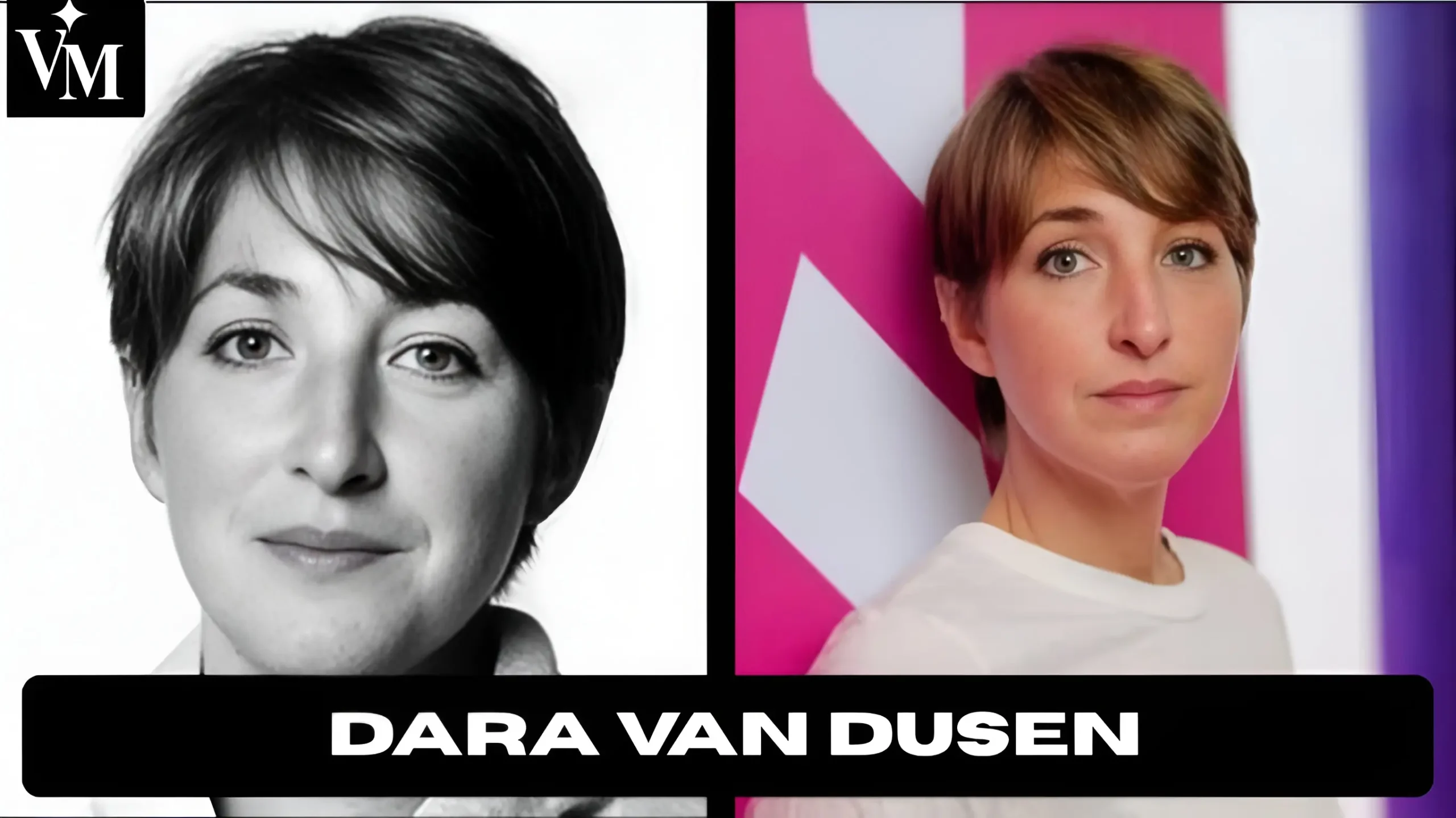
In contemporary cinema, few directors carry both the weight of artistic legacy and the burden of creating original, groundbreaking work. Dara Van Dusen represents a unique intersection of American filmmaking tradition and European cinematic innovation. As an American-Norwegian filmmaker, director, and screenwriter, she has emerged as a distinctive voice in the indie film landscape, bringing depth, historical consciousness, and unflinching humanity to her directorial work.
The trajectory of Dara Van Dusen’s career illustrates a compelling narrative about artistic inheritance, international education, and the courage required to forge one’s own creative path. While undeniably connected to a family of legendary performers and filmmakers, Dara Van Dusen has systematically demonstrated that her achievements arise from genuine talent, rigorous training, and an uncompromising artistic vision. Her work transcends the potential pitfall of nepotism through merit, festival recognition, and the respect of international film communities.
This comprehensive exploration examines Dara Van Dusen’s multifaceted career, from her early acceptance to one of Europe’s most prestigious film schools to her landmark feature directorial debut that premiered at the Berlin International Film Festival. Understanding Dara Van Dusen’s work provides insight into contemporary independent filmmaking, the role of international education in shaping artistic perspectives, and the evolution of storytelling in the modern era.
The Weight of Legacy: Understanding Dara Van Dusen’s Artistic Heritage
Dara Van Dusen was born on June 23, 1986, in New York City, into what can only be described as a cinematic dynasty. Her lineage extends to some of Hollywood’s most celebrated figures, yet this heritage serves as both inspiration and context rather than definition.
Her grandmother, Carroll Baker, stands as an Academy Award-winning actress whose career spanned decades, establishing herself as a formidable talent in classical Hollywood cinema. Carroll Baker’s work demonstrated the kind of artistic rigor and commitment that would echo through subsequent generations of her family. Her grandfather, Jack Garfein, contributed as a director and screenwriter, adding another layer of filmmaking expertise to the family narrative.
Bruce Van Dusen, her father, continues the directorial tradition, while her mother, Blanche Baker, maintained a respected acting career. Growing up in this environment meant that Dara Van Dusen was exposed to filmmaking not as an abstraction but as a lived practice. Dinner table conversations likely revolved around script analysis, directorial choices, performance techniques, and the business realities of cinema.
However, proximity to achievement does not automatically confer talent or vision. What distinguishes Dara Van Dusen is her deliberate choice to pursue formal training at an elite European institution rather than relying on family connections within the American film industry. This decision reflects maturity and artistic seriousness-a commitment to earning credibility through rigorous education and demonstrated skill.
Education and Early Recognition: The Polish National Film School Achievement
The decision to study at the Polish National Film School marked a pivotal moment in Dara Van Dusen’s artistic development. This institution, located in Warsaw, ranks among the most selective and prestigious film schools globally. The acceptance rate for international students remains exceptionally competitive, making Dara Van Dusen’s admission as one of only three international students accepted in her cohort a significant achievement that speaks to her artistic potential and application strengths.
The Polish National Film School has produced numerous directors whose work has gained international recognition. This training ground emphasizes rigorous technical skills, theoretical knowledge, and artistic experimentation. Students engage with cinema history, screenwriting theory, visual composition, and the practical realities of production under the mentorship of experienced filmmakers and scholars.
Choosing Poland over potentially easier pathways in America represented a conscious decision by Dara Van Dusen to challenge herself within an intellectually demanding environment. European film schools, particularly in Poland, maintain different pedagogical approaches than many American institutions, emphasizing European cinema traditions, international perspectives, and artistic integrity over commercial considerations.
The Breakthrough: “Significant Others” at Cannes
Dara Van Dusen’s early work, the short film “Significant Others” (also titled “Małżonkowie” in Polish), achieved remarkable recognition by being selected for the 2009 Cannes Film Festival Official Selection. This inclusion represents far more than a conventional film festival credit-it signifies that her work attracted the attention of Cannes’ curatorial team, known for maintaining extraordinarily high standards.
The Cannes Film Festival Official Selection process involves hundreds of submissions annually competing for limited slots. The inclusion of an emerging filmmaker’s short work in this prestigious venue indicates distinctive artistic vision, technical competence, and thematic resonance that resonated with international programmers. For Dara Van Dusen, this early career achievement established credibility within festival circuits and demonstrated that her talent transcended family connection.
Key Early Career Indicators:
- Successfully completed training at one of Europe’s most selective film institutions
- Achieved international festival recognition within years of graduation
- Demonstrated capacity to create work that attracted professional-level curatorial attention
- Established network connections within European and international film communities
This foundation proved essential for Dara Van Dusen’s subsequent career development, as festival recognition opens doors within industry circles, attracts producers and collaborators, and provides validation that extends beyond family networks.
European Production Experience: Building Expertise Across Mediums
Between her early festival success and her feature directorial debut, Dara Van Dusen accumulated substantial experience working across European productions in various capacities. This period of her career, while sometimes overshadowed by discussion of her feature work, represents crucial professional development that shaped her directorial sensibilities.
She contributed to projects including Viking Wolf (2022), a notable Scandinavian production, and Teddy’s Christmas (2022), working in script and continuity departments. These roles, though not directorial positions, provided invaluable exposure to production workflows, collaborative dynamics, and the practical realities of bringing stories to screen at professional levels.
Working in script continuity requires meticulous attention to detail, understanding of narrative structure, and the ability to maintain consistency across production schedules that rarely proceed in linear fashion. Script department professionals serve as custodians of story integrity, ensuring that directorial choices align with established narrative logic and visual consistency. This work develops an intimate understanding of how stories function at technical and creative levels.
Her involvement with European productions meant that Dara Van Dusen operated within filmmaking cultures distinct from American cinema-engaging with Scandinavian narratives, Nordic aesthetic sensibilities, and production practices shaped by European creative traditions. This cross-cultural immersion broadened her artistic vocabulary and demonstrated adaptability to different creative environments.
Professional Development Through Production Work:
- Developed mastery of script continuity and narrative consistency
- Gained exposure to Scandinavian and Northern European filmmaking aesthetics
- Built professional relationships within European production communities
- Accumulated technical knowledge about production scheduling, creative problem-solving, and collaborative filmmaking
- Established reputation for reliability and professional competence
This groundwork positioned Dara Van Dusen to approach her feature directorial debut not as a first-time filmmaker learning fundamental skills, but as an experienced professional equipped with practical knowledge and industry credibility.
A Prayer for the Dying: The Feature Directorial Debut
The Project: Ambition Meets Artistic Vision
In 2026, Dara Van Dusen released her feature directorial debut, “A Prayer for the Dying,” an undertaking that demonstrates remarkable artistic ambition and thematic depth. The film represents an adaptation of Stewart O’Nan’s acclaimed novel, itself a marker of literary significance. O’Nan’s original work received critical recognition, and the decision to adapt it for film required not merely directorial skill but also sensitivity to the source material and confidence in reimagining narrative through cinematic language.
The project assembled an impressive cast featuring Johnny Flynn, an accomplished British actor known for acclaimed performances in television and independent cinema, and John C. Reilly, a celebrated actor with extensive experience across independent and mainstream productions. Securing talent of this caliber for an indie historical drama reflects the project’s credibility and Dara Van Dusen’s capacity to attract accomplished collaborators.
Narrative Scope and Thematic Ambition
“A Prayer for the Dying” is positioned as a survival thriller set in 1870s Wisconsin, following a Civil War veteran confronting a devastating town epidemic. This premise immediately signals thematic complexity: the film engages with trauma (the psychological consequences of warfare), mortality (the epidemic’s indiscriminate devastation), community (how societies respond to existential threats), and individual resilience (the veteran’s personal struggle).
Historical settings demand meticulous attention to period detail, visual authenticity, and the ability to explore contemporary thematic concerns through historical lens. Dara Van Dusen’s choice to make her feature debut within this genre and setting reveals artistic ambition-this is not a modest, contained coming-of-age story but an expansive historical drama with significant production demands.
The 1870s Wisconsin setting also positions the narrative within American history that remains psychologically present-Civil War trauma, westward expansion, frontier conditions, and disease’s role in shaping community. By setting her film in this historical moment, Dara Van Dusen engages audiences with American mythology and historical consciousness.
Festival Performance and Critical Recognition
The film’s trajectory through festival circuits demonstrates industry recognition and critical validation:
2026 Berlin International Film Festival (World Premiere): The film premiered in the Perspectives competition, one of the festival’s most prestigious categories. The Berlin Film Festival’s Perspectives section specifically showcases innovative, artistically ambitious work that pushes cinematic boundaries. Inclusion in this competition indicates that the festival’s curatorial team recognized “A Prayer for the Dying” as work worthy of international showcase at one of cinema’s most important venues.
Fantastic Fest 2026 (North American Premiere): The film subsequently premiered at Fantastic Fest, an Austin-based festival renowned for championing genre cinema, independent work, and distinctive storytelling voices. This venue recognizes the film’s thriller elements while also acknowledging its literary adaptation credentials and character-driven narrative.
The strategic progression through these festivals demonstrates how Dara Van Dusen’s debut positioned itself within global cinema conversations. The Berlin premiere establishes international significance, while the Fantastic Fest premiere targets North American audiences and industry professionals.
Filmmaking Vision and Directorial Approach
Adaptation as Creative Challenge
Dara Van Dusen’s work as both director and screenwriter on “A Prayer for the Dying” reveals her understanding of adaptation as creative transformation rather than mere translation. Screenwriting for adaptation requires intimate engagement with source material while recognizing cinema’s distinct narrative possibilities. A novel’s internal monologue becomes visual storytelling; descriptive passages transform into production design; thematic undercurrents crystallize through performance and cinematography.
Her dual role as director-screenwriter demonstrates that she possesses comprehensive creative vision-she understands not only how to visualize stories but how to construct cinematic narratives at the writing stage. This integration of writing and directing, increasingly common among ambitious independent filmmakers, allows for coherent artistic vision that isn’t compromised through collaboration with external screenwriters.
Historical Storytelling and Authenticity
The choice to make a historical film as a feature debut indicates Dara Van Dusen’s confidence in her capacity to manage complex production logistics. Historical films demand extensive research, attention to period detail, costume authenticity, set design that reflects specific eras, and performance choices that feel genuine to historical context while remaining cinematically engaging.
Dara Van Dusen’s European film training equipped her with perspectives on historical cinema distinct from American approaches. European cinema often treats history not as exotic backdrop but as psychological and spiritual terrain-German, Polish, Scandinavian, and French cinema traditions emphasize how history shapes individual consciousness and community dynamics.
Thematic Maturity and Emotional Depth
The narrative focus on a Civil War veteran confronting epidemic reveals thematic sophistication. Rather than centering on action or spectacle, the film explores psychological states, moral complexity, and how individuals respond to circumstances beyond personal control. This emotional and philosophical orientation suggests a director interested in character interiority, existential questions, and the psychological weight of historical events.
The Collaborative Process: Working with Accomplished Talent
Johnny Flynn’s Participation
Johnny Flynn’s involvement brings particular significance. Flynn has demonstrated capacity for complex, emotionally nuanced performances across independent and prestige productions. His willingness to commit to Dara Van Dusen’s project speaks to her reputation among actors-she apparently created an artistic environment where accomplished performers wanted to work and trusted her directorial vision.
John C. Reilly’s Engagement
John C. Reilly’s participation adds another dimension. Reilly possesses extensive experience with independent cinema and has worked with distinctive directorial voices. His involvement in “A Prayer for the Dying” indicates the film attracted talent comfortable with challenging, character-driven narratives rather than conventional commercial fare.
The capacity to attract and collaborate with accomplished actors represents a crucial directorial skill often overlooked in discussions about filmmaking. Directors must communicate artistic vision persuasively, create safe environments for performance experimentation, provide clear direction while allowing actor agency, and demonstrate the artistic credibility that makes talent want to participate.
Case Study: From Concept to Festival Success
The Development Process
The journey from literary source material to completed film involves numerous creative and practical decisions. Dara Van Dusen’s process likely included:
Script Development: Adapting O’Nan’s novel required determining which narrative elements translated effectively to cinema, how to restructure narrative for visual storytelling, and which thematic threads to emphasize. This phase established the film’s directorial vision before production began.
Financing and Production: Securing funding for historical dramas remains challenging within independent cinema. Dara Van Dusen’s established reputation through festival work and European production experience likely proved essential in attracting producers and investors.
Casting: Beyond securing Flynn and Reilly, casting all roles required understanding character dynamics, finding performers who could embody historical authenticity, and building ensemble chemistry capable of conveying community dynamics.
Production Design and Cinematography: Creating 1870s Wisconsin authentically demands research, design thoughtfulness, and collaboration with cinematographers who understand visual storytelling. European production training likely shaped Dara Van Dusen’s collaborative approach with technical departments.
Post-Production and Festival Strategy: The completion of principal photography represents only one phase of filmmaking. Editing, sound design, color grading, and final mixing transform raw footage into finished cinema. The strategic decision to premiere at Berlin (international significance) followed by Fantastic Fest (North American industry and audience engagement) demonstrates sophisticated festival strategy.
Festival Reception as Validation
Festival selection represents external validation of artistic quality. When prestigious festivals program films, they signal to international audiences, critics, distributors, and industry professionals that the work merits attention. This validation becomes particularly significant for independent filmmakers operating outside studio systems.
The progression of “A Prayer for the Dying” through major festivals establishes Dara Van Dusen as a director whose work attracts institutional recognition and critical interest. This trajectory creates momentum that can lead to distribution opportunities, future financing, and expanded creative opportunities.
Impact on Independent Cinema and Contemporary Filmmaking
Representation of Women Filmmakers
Dara Van Dusen’s emergence as a distinctive directorial voice contributes to increasing representation of women directors in feature filmmaking. While female filmmakers have always existed, institutional barriers historically limited their access to financing and distribution. Dara Van Dusen’s festival success and feature directorial debut add to the growing cohort of women whose films receive international recognition.
Her background-educated in European film schools, working across international productions, establishing credibility through festival circuits-represents a contemporary pathway for women filmmakers seeking to establish independent careers.
International Co-Production Models
The involvement of American actors (Reilly), British talent (Flynn), and what appears to be European production infrastructure demonstrates how contemporary independent filmmaking increasingly operates across national boundaries. These international co-production models enable ambitious projects that might struggle to find financing within single national contexts.
Dara Van Dusen’s work exemplifies how American filmmakers increasingly engage with European production infrastructure, financing, and aesthetic traditions. This transnational approach enriches cinema by facilitating cross-cultural creative exchange.
Literary Adaptation in Independent Cinema
The adaptation of Stewart O’Nan’s novel for Dara Van Dusen’s feature debut signals continued importance of literary sources in independent filmmaking. While blockbuster cinema has become increasingly dependent on pre-existing intellectual property, independent cinema maintains capacity for ambitious literary adaptation that treats source material with respect while exercising creative freedom.
Critical Perspectives and Industry Recognition
What Critics Value in Dara Van Dusen’s Work
Preliminary critical reception emphasizes several dimensions:
Visual Storytelling: Reviewers note the film’s visual sophistication-cinematography that reflects both historical authenticity and contemporary visual sensibilities, production design that creates immersive period environments.
Emotional Authenticity: Critics appreciate the film’s refusal to sentimentalize historical suffering or treat the epidemic as mere plot device. Instead, the narrative explores genuine human responses to mortality and community crisis.
Performance Direction: Notices regarding Johnny Flynn and John C. Reilly’s performances suggest Dara Van Dusen elicited nuanced, psychologically complex acting that transcends conventional period drama clichés.
Thematic Complexity: Reviewers engage with the film’s exploration of trauma, community, resilience, and the psychological weight of history-suggesting Dara Van Dusen achieved thematic sophistication in her feature debut.
Industry Recognition Beyond Critics
Beyond critical reception, Dara Van Dusen’s work attracts industry professionals-other directors seeking collaboration, producers identifying promising talent, distributors seeking quality independent content, and international programmers considering her work for festivals and retrospectives.
Future Directions and Artistic Evolution
While Dara Van Dusen has established distinctive voice and demonstrated feature filmmaking capacity, her career trajectory remains in development. Future considerations include:
Directorial Range: Whether she will continue with historical material or explore contemporary narratives, genre work, or experimental approaches represents an open question shaping her future artistic evolution.
International Reach: Given her European training and transnational production experience, Dara Van Dusen likely possesses capacity for work that moves across cultural contexts and production infrastructures.
Emerging Themes: Future projects may develop thematic concerns evident in “A Prayer for the Dying”-trauma, community resilience, moral complexity in historical contexts-or introduce entirely new preoccupations.
FAQ: Understanding Dara Van Dusen’s Career and Filmography
Q: What makes Dara Van Dusen’s background unique among contemporary filmmakers?A: Dara Van Dusen combines notable artistic family heritage with rigorous international film education and practical production experience. Rather than relying exclusively on family connections, she pursued selective training at the Polish National Film School and built credibility through festival recognition and European production work. This combination of legacy and self-directed achievement creates a distinctive profile.
Q: Did Bruce Van Dusen have any children?
A: Bruce Van Dusen has at least one child—Dara Van Dusen—who is the subject of the article. The article does not specify whether he has other children or provide details about his complete family structure beyond mentioning Dara as his daughter.
Q: What is the history of the Van Dusen family?
A: The article traces artistic lineage mentioning Carroll Baker (Academy Award-winning actress/grandmother) and Jack Garfein (director/grandfather), but it does not provide a comprehensive Van Dusen family history. It focuses primarily on Dara Van Dusen’s career rather than documenting the broader family’s historical background, origins, or genealogy.
Q: How significant is inclusion in the Cannes Film Festival Official Selection for a short film?
A: Cannes Film Festival represents one of cinema’s most prestigious venues globally. Selection for the Official Selection (as opposed to other festival categories) indicates that international programmers recognized the work’s artistic merit among hundreds of submissions. For an emerging filmmaker like Dara Van Dusen, this recognition established credibility and opened doors within international film communities.
Q: Why would Dara Van Dusen choose to premiere her feature at Berlin rather than other major festivals?
A: The Berlin International Film Festival holds particular prestige for international and challenging cinema. The Perspectives competition specifically showcases artistically ambitious work. Premiering at Berlin positioned “A Prayer for the Dying” within conversations about innovative contemporary cinema rather than other festival contexts. The subsequent Fantastic Fest premiere then targeted North American audiences and industry professionals.
Q: What does her work in script and continuity departments reveal about her directorial approach?
A: Script continuity work requires meticulous attention to narrative consistency, technical precision, and problem-solving. This background likely equipped Dara Van Dusen with understanding of production logistics, collaborative workflows, and practical constraints that shape filmmaking. These skills inform her work as director and screenwriter.
Q: How does literary adaptation figure in Dara Van Dusen’s feature directorial debut?
A: “A Prayer for the Dying” adapts Stewart O’Nan’s novel, requiring Dara Van Dusen to demonstrate screenwriting competence alongside directorial vision. Adaptation demands deep engagement with source material while exercising creative freedom to reimagine narrative through cinematic language. Her dual role as director-screenwriter suggests comprehensive creative vision.
Q: What can emerging filmmakers learn from Dara Van Dusen’s career trajectory?
A: Dara Van Dusen’s path emphasizes several principles: pursuing elite education even when family connections exist; building international experience and exposure; establishing credibility through festival recognition; and accumulating diverse production experience before directorial opportunities. Rather than relying exclusively on heritage or connections, she systematically built demonstrable skills and professional reputation.
Q: How does Dara Van Dusen’s work reflect contemporary trends in independent filmmaking?
A: Her career exemplifies several contemporary developments: the importance of international film education, transnational production models, women filmmakers gaining institutional recognition, and literary adaptation’s continued relevance in independent cinema. Her work also demonstrates how social media, festival circuits, and global distribution enable ambitious independent projects to reach international audiences.
Q: Why is the casting of Johnny Flynn and John C. Reilly significant for “A Prayer for the Dying”?
A: Both actors bring established reputations and experience with independent, character-driven cinema. Their participation signals the film’s credibility and Dara Van Dusen’s capacity to attract accomplished collaborators. In independent filmmaking, casting talent of this caliber represents substantial achievement and suggests the project possessed compelling artistic vision and production values.
Q: What does Dara Van Dusen’s educational choice reveal about her artistic approach?
A: Selecting the Polish National Film School over American institutions reflects commitment to rigorous international education and exposure to European cinema traditions. This choice suggests she valued comprehensive artistic training over reliance on family connections or easier pathways. It indicates seriousness about craft and willingness to challenge herself within intellectually demanding environments.
Q: How might Dara Van Dusen’s work contribute to conversations about women in filmmaking?
A: Her emergence as a recognized directorial voice adds to increasing representation of women filmmakers in feature cinema. Her pathway-international education, festival success, feature directorial debut with significant production values-represents a contemporary model for women establishing independent filmmaking careers outside traditional studio systems.
Conclusion: A Filmmaker’s Emerging Voice
Dara Van Dusen represents an emerging artistic voice in contemporary independent cinema-a filmmaker whose work transcends family legacy through demonstrated talent, rigorous training, and distinctive creative vision. Her trajectory from Polish film school student to festival-recognized short filmmaker to feature director demonstrates the possibility of building meaningful cinema careers through international education, persistent artistic development, and commitment to craft excellence.
“A Prayer for the Dying” stands as her statement of artistic arrival-a feature that demonstrates technical sophistication, thematic maturity, collaborative excellence, and the capacity to create cinema that engages audiences and attracts international institutional recognition. The film’s festival success and critical reception validate her position as a filmmaker worth watching.
As independent cinema continues evolving, voices like Dara Van Dusen’s-rooted in international cinema traditions, educated through rigorous institutional training, and committed to artistic integrity over commercial compromise-become increasingly vital. Her work contributes to cinema that challenges, moves, and provokes thought about human experience across historical and contemporary contexts.
The question is not whether Dara Van Dusen will continue making films-her festival success and industry recognition make subsequent opportunities likely. The more compelling question concerns what distinctive artistic concerns she will explore, what new collaborative relationships she will forge, and how her voice will continue evolving through future projects. Early indicators suggest that her emerging career will contribute meaningfully to contemporary cinema.
For More Visits: Value Magazine
Also Read: Niles Neumann: 5 Reasons This Elite Guard Dominates 2030 Class

