



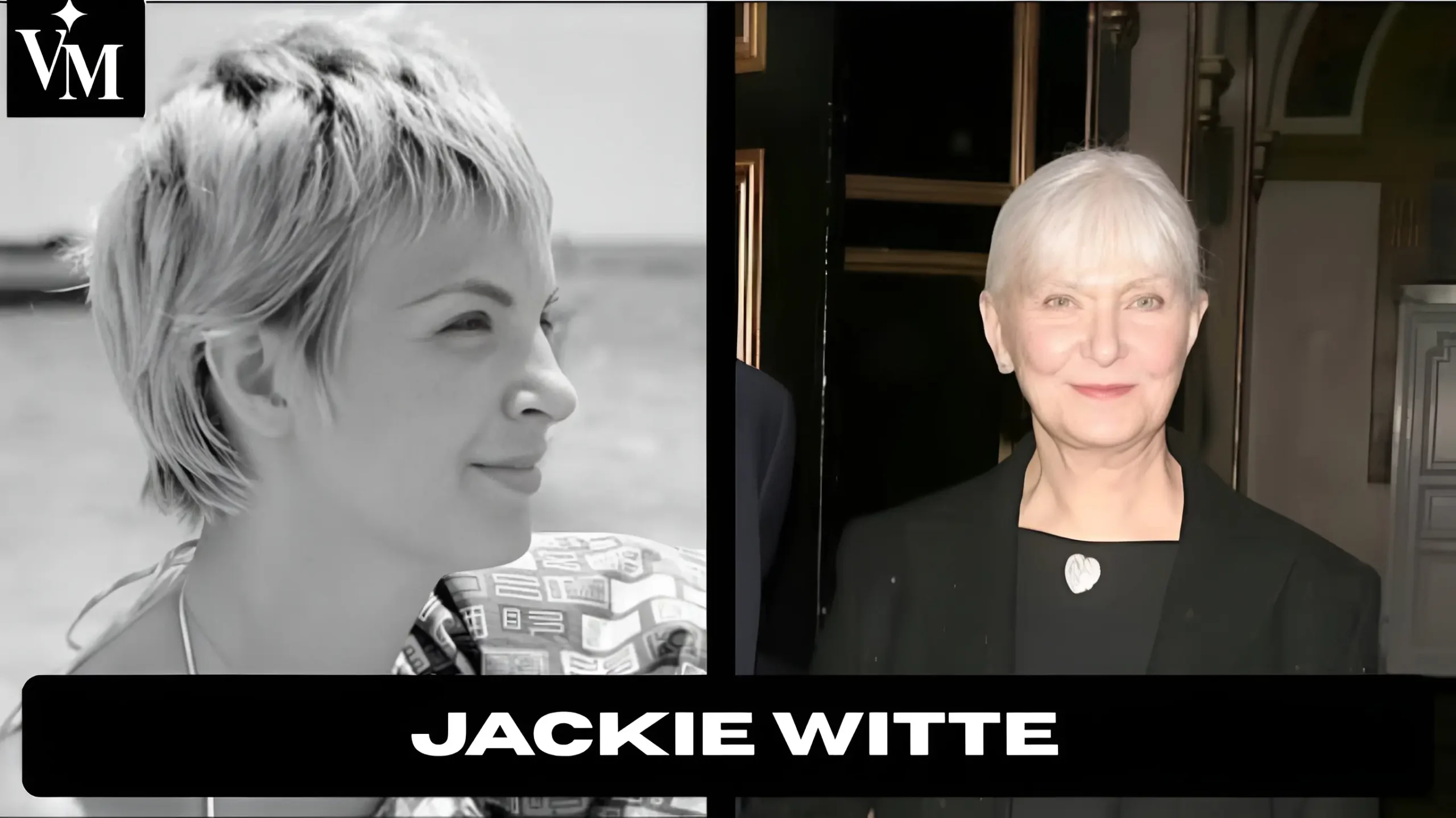
When most people think about Paul Newman’s romantic legacy, their minds immediately drift to his legendary 50-year marriage to actress Joanne Woodward-a partnership that became synonymous with Hollywood glamour, durability, and genuine affection. However, the story of Jackie Witte, Newman’s first wife, remains one of cinema’s most overlooked narratives. Her life tells a different, equally compelling story: one of sacrifice, ambition deferred, and the often-invisible support systems that propel entertainers to greatness.
Jackie Witte’s journey from a college-aged aspiring actress to the steadying force behind one of Hollywood’s greatest stars represents a crucial, yet largely forgotten chapter in the annals of entertainment history. Born on September 15, 1929, she would spend the most formative years of her own life building a foundation for someone else’s dreams. Her story challenges conventional narratives about love, partnership, and the choices that women in the entertainment industry made during the mid-twentieth century.
This comprehensive exploration of Jackie Witte’s life, marriage, and legacy reveals not just the personal trajectory of a woman who loved deeply and sacrificed considerably, but also illuminates the complex dynamics of early Hollywood partnerships before the era of celebrity transparency.
The Meeting That Changed Everything: Summer Stock Theater and Instant Connection
The story of Jackie Witte and Paul Newman began not in a glamorous Hollywood setting, but rather in the humble world of summer stock theater production in 1949. At nineteen years old, Jackie was a college student pursuing her own dream of becoming an actress. She possessed the determination and passion that characterized aspiring performers of her generation-young women who believed that talent, dedication, and the right opportunity could propel them into the spotlight.
Paul Newman, four years her senior at twenty-four, was a Navy veteran attempting to build his own acting career. Having recently completed his military service, Newman was in many ways still searching for his artistic identity, exploring the craft of acting through training and whatever roles he could secure. Neither of them arrived at summer stock theater with the confidence of someone destined for superstardom; instead, both were hungry, ambitious young performers willing to work in less prestigious venues to gain experience.
The chemistry between them was reportedly immediate and unmistakable. Theater productions, even small summer stock operations, have a tendency to create intense emotional environments. Actors work in close quarters, expose vulnerability through their performances, and often form deep connections with scene partners. For Jackie and Paul, what began as professional collaboration quickly evolved into something far more personal.
Key elements of their initial meeting included:
- Shared artistic passion and understanding of the creative process
- The romantic atmosphere inherent in theater environments
- Genuine mutual respect for each other’s commitment to acting
- The bond that forms between young people pursuing unconventional career paths
What made their connection particularly significant was that both understood the sacrifices required to build an acting career. They spoke the same language, understood the rejection and disappointment that came with auditions, and could support each other’s ambitions in ways that few others could. This foundation would prove crucial in the years ahead.
The Whirlwind Romance and December 1949 Wedding
For Jackie Witte and Paul Newman, the journey from meeting to marriage moved with remarkable speed. By contemporary standards, their decision to marry just a few years after meeting might seem hasty. However, in the context of 1949, such swift romantic progression was not unusual, particularly among young people drawn to the entertainment industry. There was often an intensity to artistic communities that accelerated emotional connections and major life decisions.
On December 27, 1949, Jackie Witte became Mrs. Paul Newman. The wedding itself was not a grand Hollywood affair-Newman had not yet achieved any significant success in film, and neither of them moved in exclusive entertainment circles. Instead, it was the union of two young people in love, both believing they had found their life partner, ready to build a life together while pursuing their artistic dreams.
The early days of their marriage were marked by genuine partnership and mutual support. They were not wealthy; the stark reality of building an acting career meant financial instability and constant uncertainty. However, they had something arguably more valuable: each other’s unwavering belief in their potential success.
Building a Life on Staten Island: The Modest Years
The first years of Jackie and Paul Newman’s marriage took place on Staten Island, New York-a far cry from the Hollywood Hills or Manhattan’s upper west side. Staten Island in the early 1950s was a working-class community, a place where people built lives based on solid values and pragmatic approaches to success. The island was not where ambitious entertainers typically chose to reside, but for a young couple without substantial financial resources, it represented an accessible place to establish their household.
During these modest years, Jackie made decisions that would define her role in their marriage. While Paul continued his acting training-including attending the prestigious Yale School of Drama-Jackie increasingly pivoted her own career trajectory. The specifics of her own acting ambitions gradually became secondary to the practical realities of their growing household.
The realities of their Staten Island life included:
- Limited financial resources requiring careful budgeting
- Paul’s continued investment in training and education
- Growing family responsibilities that demanded Jackie’s attention
- The need for someone to maintain stability while Paul pursued uncertain opportunities
- The unglamorous reality of building an entertainment career from a position of minimal advantage
Yale School of Drama represented a significant investment in Paul’s future, and Jackie recognized the importance of this opportunity. The school has trained some of the finest actors in American cinema, and Newman’s attendance there was a crucial stepping stone toward his eventual breakthrough roles. However, the financial burden of this training fell heavily on the family unit, and Jackie absorbed the responsibility of managing household logistics while her husband focused on his artistic development.
Family Expansion: Three Children and Domestic Responsibilities
As the 1950s progressed, Jackie and Paul Newman’s family grew. Between 1950 and 1954, they welcomed three children into their lives:
- Scott Newman (born 1950)
- Susan Kendall Newman (born 1953)
- Stephanie Newman (born 1954)
The arrival of each child represented both joy and increased responsibility for Jackie. Motherhood in the 1950s carried different social expectations than contemporary parenting culture. Women were expected to be the primary caregivers, household managers, and emotional anchors for their families. For Jackie, this meant that her role within the marriage became increasingly defined by domestic responsibilities.
The expansion of their family coincided with Paul’s growing ambitions and training requirements. As he became more established in various theater productions and began receiving better roles, his work often required travel. Theater productions in New York, and later opportunities in other cities, meant that Paul was frequently away from home for extended periods. Someone needed to maintain continuity and stability at home-that responsibility fell almost entirely to Jackie.
The domestic challenges Jackie navigated included:
- Managing household finances on a limited budget
- Caring for three young children while Paul pursued career opportunities
- Handling the day-to-day logistics that allowed Paul to focus on his acting career
- Maintaining emotional stability during periods of separation
- Making daily parenting decisions without her husband’s direct involvement
The psychological burden of these responsibilities cannot be understated. Jackie was essentially building her family’s foundation alone during crucial years. Her contribution was fundamental to Paul’s ability to pursue his ambitions without the constant distraction of household crises or financial instability at home.
The Sacrifice: Stepping Away from Her Own Aspirations
One of the most poignant aspects of Jackie Witte’s story is the trajectory of her own acting ambitions. She had entered marriage with clear artistic goals and genuine talent. However, as her family expanded and Paul’s career began gaining momentum, Jackie’s own professional dreams gradually receded into the background.
This was not necessarily a single, dramatic decision. Rather, it was the inevitable result of circumstance, expectation, and the choices that seemed necessary at the time. Each audition Jackie missed because she needed to be home with the children represented a small step away from her ambitions. Each theater production Paul participated in while she managed the household deepened the asymmetry in their respective careers.
Historical accounts and biographical materials suggest that this gradual stepping back from her own dreams created an emotional undercurrent in their marriage. The early shared understanding of artistic aspiration-which had been the foundation of their connection-increasingly gave way to a dynamic where one partner’s career advancement overshadowed the other’s.
The emotional complications of this dynamic included:
- The tension between genuine love and unmet personal ambitions
- Resentment that could simmer beneath the surface of daily family life
- The growing disparity in their respective professional opportunities
- The subtle but persistent frustration of postponed dreams
- The question of whether sacrifices made for love and family were freely chosen or quietly resented
Many women of Jackie’s generation faced similar crossroads. The cultural narrative of the 1950s suggested that a woman’s fulfillment came through supporting her husband’s success and raising her children well. However, for those who had tasted the satisfaction of creative expression, the transition from aspiring actress to full-time homemaker was not always a smooth one.
The Broadway Turning Point: Picnic and the Arrival of Joanne Woodward
The trajectory of Jackie and Paul Newman’s marriage took a decisive turn in 1953 when Paul was cast in the Broadway play “Picnic.” This role represented a significant opportunity-genuine professional advancement from the struggling actor he had been to an entertainer with a notable part in a major production. Theater was still the primary training ground for serious actors in the early 1950s, and a successful Broadway role could lead to film opportunities.
However, the “Picnic” production introduced another element into Paul’s life: Joanne Woodward, a talented actress who would become his second wife. The exact timeline and nature of Paul and Joanne’s connection during the “Picnic” rehearsals and run is something that different accounts describe with varying degrees of specificity. What is clear is that Joanne represented something powerful in Paul’s life-both artistically and romantically.
Unlike Jackie, who had increasingly stepped away from her own professional pursuits, Joanne was an accomplished actress in her own right. She brought to Paul’s life an understanding of his professional world that Jackie, now primarily focused on domestic responsibilities, could no longer provide. They were creative equals in a way that Paul and Jackie had perhaps ceased to be.
The emergence of his feelings for Joanne during a period when he was just beginning to experience professional success created an untenable situation. Paul Newman was at a pivotal moment in his career, with new opportunities opening before him. The person who could most fully understand and support his ambitions in this moment was not the woman who had supported him through his struggling years, but rather a woman who was simultaneously experiencing her own artistic ascendancy.
The emotional landscape of this period included:
- Conflicting loyalties between family obligation and personal desire
- The intersection of professional advancement with romantic evolution
- The difficult position of a spouse suddenly feeling displaced after years of sacrifice
- The realization that the foundation of a marriage had shifted in ways that seemed irreversible
- The painful recognition that ambition, once deferred, can create distance between partners
The Dissolution: January 1958 and the Aftermath
By the mid-1950s, the marriage between Jackie and Paul Newman had deteriorated beyond repair. The combination of emotional distance, unmet needs on both sides, and Paul’s romantic involvement with Joanne Woodward created an impossible situation. On January 28, 1958, Jackie and Paul Newman divorced.
The timing and manner of their separation reveal something significant about the era and about Paul’s character. While contemporary accounts do not describe the divorce as contentious or bitter, neither was it a clean break. Jackie had spent nearly a decade supporting her husband’s ambitions, had sacrificed her own career, and had managed a household and raised three children. The dissolution of their marriage represented not just a personal tragedy for her, but also a fundamental disruption to the life she had built.
What makes the conclusion of their marriage particularly striking is that Paul married Joanne Woodward just one day after his divorce from Jackie was finalized. The swiftness of this transition suggests the inevitability of where his heart lay, but also speaks to the emotional reality that Jackie was experiencing: she had been replaced, and the replacement had happened while she was still building a family with him.
The immediate aftermath of the divorce included:
- Jackie’s departure from public life and the entertainment industry entirely
- The raising of three children as a single mother during a less supportive cultural moment
- The establishment of a quiet, private life far from Hollywood’s spotlight
- The decision not to remarry or to seek another significant romantic partnership
- The gradual erosion of Jackie Witte from public memory while Paul Newman ascended to legendary status
Jackie’s Later Life: A Private Existence Off the Public Radar
Following the divorce, Jackie Witte made a deliberate choice to remove herself entirely from public view. In an era when Hollywood offered ample opportunities for ex-wives to capitalize on their former husbands’ growing fame-through memoirs, interviews, or media appearances-Jackie chose a radically different path. She retreated into privacy, raised her three children, and built a life that was almost defiantly removed from the entertainment industry that had defined her youth.
This choice is significant in understanding Jackie’s character. She did not seek to profit from her history with Paul Newman. She did not grant interviews detailing the demise of their marriage or the pain of his infidelity. She did not publish a memoir or attempt to remain relevant through continued association with his fame. Instead, she lived a quiet life, largely removed from public scrutiny, until her death in New York in 1994 at the age of sixty-four.
The privacy Jackie maintained for decades was broken only occasionally by biographical researchers or entertainment journalists seeking information about Paul Newman’s early life. Even then, the details about her are sparse and often secondary to narratives about Newman himself.
Her later years were characterized by:
- A commitment to raising her children with stability and normalcy
- The role of a private citizen, removed from Hollywood’s glare
- The quiet dignity of someone who did not seek revenge or compensation through publicity
- The building of a life outside the entertainment industry entirely
- A legacy defined more by what she refused to do than by any public accomplishments
Paul Newman’s Later Reflections: Guilt and Recognition
Perhaps the most poignant aspect of Jackie Witte’s story is that, in his later years, Paul Newman himself acknowledged the pain his actions had caused her. The massive success that followed his marriage to Joanne Woodward-his rise to becoming one of Hollywood’s most beloved and respected actors-was built on a foundation that had been laid, in part, by Jackie’s years of sacrifice and support.
Newman’s later reflections on his marriage to Jackie and his treatment of her suggest a man who recognized what he had done. This is not to say that he was solely responsible for the failure of their marriage or that Jackie bore no responsibility in their relationship’s dissolution. Rather, it is to acknowledge that Paul Newman, looking back on his life, understood that Jackie had given significantly and received very little in return.
The fact that Newman could express this guilt suggests a capacity for self-reflection and remorse. However, it does not change the fundamental reality of Jackie’s experience: she had sacrificed her own ambitions, invested her energy in building a family and supporting her husband, and ultimately found herself replaced by another woman who could provide what she no longer could-professional parity and romantic excitement.
Newman’s later recognition included:
- Acknowledgment of the emotional pain the separation caused Jackie
- Recognition of her contributions to his early career development
- Apparent regret for his treatment of someone who had been devoted to his success
- A testament to her character and the quality of their early partnership
- An understanding that success built on the foundation of someone else’s sacrificed ambitions carries moral weight
The Three Newman-Witte Children: Carriers of Her Legacy
While Jackie herself remained largely absent from public life, her legacy continued through her three children. Scott Newman, Susan Kendall Newman, and Stephanie Newman each grew up in the shadow of their father’s celebrity, but they also maintained connection to their mother’s influence and presence in their lives.
Scott Newman, the eldest, struggled significantly with the pressures of being Paul Newman’s son, eventually dying in 1978 under circumstances that devastated his father and brought about his own period of profound reflection. Susan became an actress herself, building a career in television. Stephanie also found her own path in life.
The children, to varying degrees, have been custodians of Jackie’s memory. They knew her not as the supporting actress in a Hollywood story, but as their mother-the woman who raised them, comforted them, and provided the stability that allowed them to navigate their lives. For them, Jackie Witte’s sacrifice was visible, tangible, and deeply personal.
Jackie Witte’s Place in Hollywood History
When film historians and entertainment journalists discuss Paul Newman’s life and legacy, Jackie Witte typically appears as a footnote-the first wife mentioned briefly before the focus shifts to his legendary marriage to Joanne Woodward. However, this characterization fundamentally misses the significance of her role in his story and in the broader narrative of Hollywood.
Jackie Witte represents the thousands of women whose contributions to the entertainment industry were rendered invisible by circumstance, era, and the choices they made in support of others. She represents the cost of ambition pursued by one partner at the expense of another’s dreams. She represents a moment in Hollywood history when the support system for a rising star was taken for granted rather than celebrated.
Most importantly, Jackie Witte represents a choice: to remain private, dignified, and removed from the spotlight rather than to capitalize on her history for personal gain or recognition. In an industry built on publicity and self-promotion, her decision to step back from public view was itself a form of rebellion against the conventional wisdom that fame and recognition are inherently desirable.
Frequently Asked Questions About Jackie Witte
Who was Jackie Witte?
Jackie Witte was an American actress and the first wife of Hollywood legend Paul Newman. Born on September 15, 1929, she met Newman during a summer stock theater production in 1949 and married him in December of that year. She is primarily known for her role in supporting Newman’s early career and raising their three children.
How long were Jackie Witte and Paul Newman married?
Jackie Witte and Paul Newman were married for approximately nine years, from December 27, 1949, until their divorce was finalized on January 28, 1958.
What happened to Jackie Witte after her divorce from Paul Newman?
Following her divorce, Jackie Witte withdrew completely from public life and the entertainment industry. She raised her three children as a single mother and maintained a private existence in New York until her death on May 19, 1994, at the age of sixty-four.
Did Jackie Witte ever remarry after Paul Newman?
No, Jackie Witte never remarried after her divorce from Paul Newman. She spent the remainder of her life focusing on her family and living a quiet, private existence away from the spotlight.
How many children did Jackie Witte and Paul Newman have together?
Jackie Witte and Paul Newman had three children together: Scott Newman (born 1950), Susan Kendall Newman (born 1953), and Stephanie Newman (born 1954).
Why did Paul Newman and Jackie Witte divorce?
Paul Newman’s marriage to Jackie Witte ended primarily due to his romantic involvement with actress Joanne Woodward, whom he met during the Broadway production of “Picnic” in 1953. As Newman’s career advanced and his relationship with Woodward deepened, his marriage to Jackie deteriorated. He married Joanne Woodward just one day after his divorce from Jackie was finalized.
What was Jackie Witte’s own acting career like?
Jackie Witte was an aspiring actress when she met Paul Newman, and she had ambitions in the entertainment industry. However, as her family grew and Paul’s career advanced, she increasingly stepped away from her own professional pursuits to focus on household management and raising their children. Her own acting career never achieved significant prominence.
Did Jackie Witte speak publicly about her marriage to Paul Newman?
No, Jackie Witte deliberately maintained her privacy throughout her life and did not grant interviews or speak publicly about her marriage to Paul Newman. She chose to live a quiet life removed from the entertainment industry and public scrutiny.
What is Jackie Witte’s legacy?
Jackie Witte’s legacy is primarily one of quiet sacrifice and dignity. She represents a significant but often overlooked chapter in Paul Newman’s life-the woman who supported him through his struggling years as an actor. Her story highlights the contributions of women whose sacrifices enabled the success of their partners, yet whose own accomplishments and sacrifices were largely forgotten by history.
How did Paul Newman view Jackie Witte later in life?
In his later years, Paul Newman acknowledged the pain that his infidelity and the dissolution of their marriage had caused Jackie. He expressed guilt regarding her suffering and demonstrated recognition of her contributions to his early career and life. This retrospective acknowledgment suggests that Newman understood the emotional cost of his choices.
Where did Jackie Witte live after her divorce?
Jackie Witte lived primarily in New York following her divorce from Paul Newman. She chose to establish her life away from Hollywood, maintaining a private existence in the New York area until her death in 1994.
Were Jackie Witte’s children close to Paul Newman?
Yes, Paul Newman’s three children with Jackie maintained their relationship with their father throughout his life. As Newman became increasingly successful and his star rose, his children were raised in circumstances of greater privilege, though they also bore the complexity of being the children of a Hollywood icon.
Conclusion: A Story Worth Remembering
Jackie Witte’s story exists at the intersection of personal tragedy and historical significance. On one level, it is the story of a woman who loved deeply, sacrificed considerably, and received inadequate recognition or compensation for her contributions. On another level, it is a window into a particular moment in Hollywood history-when the entertainment industry was consolidating its power, when the lives of supporting players were rendered invisible, and when the ambitions of women were frequently subordinated to the advancement of men.
The full significance of Jackie Witte’s life cannot be understood by focusing solely on her marriage to Paul Newman or the failure of that marriage. Rather, her importance lies in what her story reveals about the choices available to women of her generation, about the costs of deferred ambition, and about the complex dynamics of partnership when both parties entered with equal dreams but circumstances forced a dramatic divergence in outcomes.
Paul Newman went on to become a legend-not just as an actor, but as a cultural icon, a philanthropist, and a symbol of American masculinity and integrity. These accomplishments were significant and genuine. However, they were built, in part, on a foundation laid by a woman who has been almost entirely forgotten by popular history. That forgetting is itself worthy of examination and correction.
Jackie Witte deserves to be remembered not as a footnote in Paul Newman’s biography, but as a significant figure in her own right-a woman who made conscious choices about her life, who loved deeply, who sacrificed much, and who maintained her dignity and privacy in the face of public indifference and personal loss. Her legacy is one of quiet strength and the often-invisible contributions that women have made to the success of those they loved.
For More Visits: Value Magazine
Also Read: Jonathan Peck: 7 Proven Tactics for Incredible Growth

