



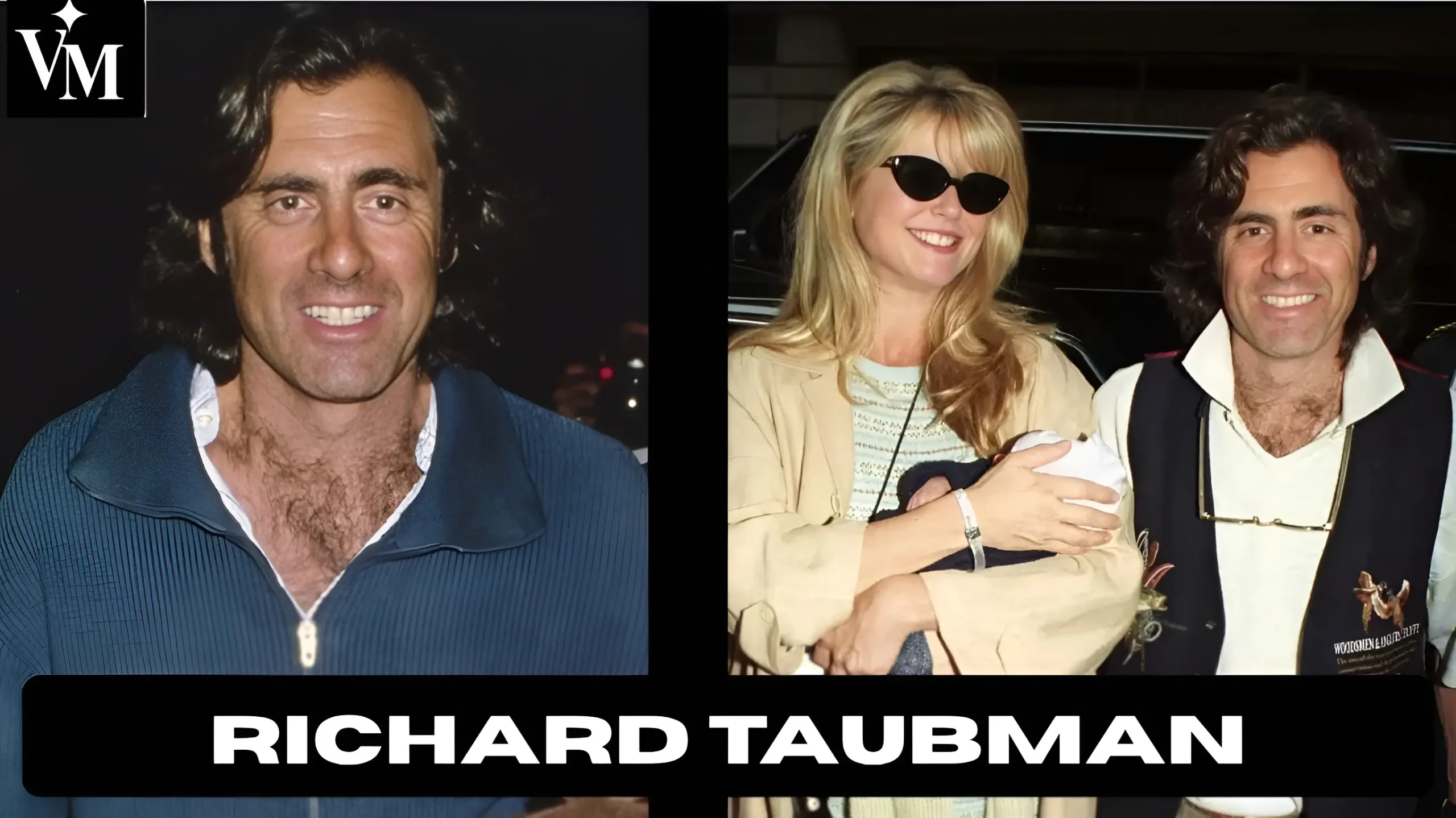
In the realm of professional expertise and business acumen, few individuals have demonstrated the consistent dedication and multifaceted competence that characterizes the career of Richard Taubman. With a career spanning multiple decades, Taubman has become synonymous with strategic thinking, innovative problem-solving, and the kind of industry knowledge that only comes from hands-on experience at the highest levels. This comprehensive article explores the professional journey, methodologies, and impact of Richard Taubman, offering insights into what makes his approach to business and leadership distinctive in today’s competitive landscape.
The professional world often celebrates those who achieve success through conventional means, but Richard Taubman represents a different breed of professional entirely. His approach combines theoretical knowledge with practical application, blending strategic vision with meticulous attention to operational detail. For professionals seeking to understand the principles that drive sustainable success, studying the career and philosophy of Richard Taubman provides valuable lessons applicable across industries and organizational contexts.
The Foundation: Understanding Richard Taubman’s Professional Background
Richard Taubman’s career foundation was built on rigorous training and an unwavering commitment to continuous learning. Throughout his professional trajectory, he has maintained a philosophy that expertise is not a destination but an ongoing journey requiring constant refinement and adaptation. This foundational belief has shaped every decision he has made throughout his career and remains central to his approach to professional development.
The early stages of Richard Taubman’s career were characterized by deliberate skill-building and strategic positioning. Rather than pursuing quick wins, he focused on developing deep expertise in his chosen fields. This approach—emphasizing mastery over speed—has become increasingly rare in modern business environments where rapid scaling often takes precedence over thorough knowledge development.
What distinguishes Richard Taubman’s approach is his recognition that sustainable professional success requires understanding the interconnected nature of different business functions. Rather than operating in silos, he has consistently demonstrated the ability to see how decisions in one area ripple across organizational boundaries. This systemic thinking has enabled him to make decisions that optimize for long-term organizational health rather than short-term metrics.
Key Characteristics of Richard Taubman’s Professional Philosophy
Richard Taubman has consistently demonstrated several core characteristics that have defined his professional identity:
• Strategic patience: The willingness to invest time in understanding complex situations before implementing solutions • Data-informed decision making: Combining quantitative analysis with qualitative insights to make better decisions • Stakeholder-centric approach: Recognizing that sustainable solutions must account for the needs and perspectives of multiple stakeholders • Continuous innovation: Embracing change while maintaining core principles and values • Transparent communication: Building trust through clear, honest dialogue with colleagues and partners • Operational excellence: Attention to detail combined with big-picture strategic thinking
These characteristics have not emerged by accident but through deliberate cultivation and reflection on professional experiences. Richard Taubman’s career demonstrates that professional excellence is not innate but developed through conscious effort and commitment to personal growth.
Strategic Methodologies: How Richard Taubman Approaches Complex Business Challenges
One of the most valuable aspects of understanding Richard Taubman’s career is recognizing the methodologies he employs when facing complex business challenges. These approaches have proven effective across different industries and organizational contexts, suggesting their applicability to diverse business environments.
The Assessment and Planning Phase
When Richard Taubman engages with a new challenge or organizational context, he begins with a comprehensive assessment phase. This phase is characterized by what might be described as “structured curiosity”—a systematic approach to understanding the situation that avoids both the trap of making assumptions and the paralysis of endless analysis.
During this phase, Richard Taubman typically focuses on understanding several key dimensions:
The organizational culture and underlying value systems that drive decision-making. Culture, he recognizes, is not what leaders say it is but what is revealed through examining actual behaviors, reward systems, and resource allocation decisions. Understanding this reality gives him insight into what changes are likely to be embraced versus resisted.
The technical and operational realities that often diverge from organizational documentation. What processes are actually being used? Where do informal systems supplement or circumvent formal ones? These insights come not from reading documentation but from direct observation and conversation with frontline personnel.
The stakeholder landscape and the competing interests that must be balanced. Richard Taubman recognizes that meaningful organizational change requires understanding who will benefit, who might feel threatened, and how to build coalitions of support that extend beyond those already predisposed to change.
Implementation Through Structured Change Management
The assessment phase naturally leads to a planning and implementation phase where Richard Taubman’s approach becomes distinctive through his emphasis on change management that respects both organizational realities and human needs.
Implementation of significant changes requires careful attention to several factors:
• Pilot programs and controlled testing: Rather than full-scale organizational rollout, testing approaches with willing participants to refine methodologies • Clear communication of rationale: Helping stakeholders understand not just what is changing but why these changes matter for organizational success • Addressing resistance constructively: Recognizing that resistance often contains valuable information about unintended consequences or implementation challenges • Building internal capability: Investing in training and development so that changes can be sustained by internal teams rather than creating dependency on external consultants • Measuring and adjusting: Establishing metrics that indicate whether changes are producing desired outcomes and building in flexibility to adjust approaches based on evidence
This structured approach to change management distinguishes Richard Taubman’s work from approaches that either move too quickly without adequate groundwork or move too slowly due to risk aversion. He has consistently found the productive middle ground.
Industry Impact and Professional Contributions
Richard Taubman’s contributions to his fields extend beyond individual organizational successes. His work has influenced how industry professionals approach common challenges and has contributed to the evolution of best practices across multiple sectors.
Thought Leadership and Knowledge Sharing
An important dimension of Richard Taubman’s professional impact is his commitment to sharing knowledge and insights with the broader professional community. This commitment reflects a philosophy that professional growth is both an individual and collective endeavor. By sharing methodologies, lessons learned, and frameworks, professionals like Richard Taubman contribute to the raising of standards across industries.
This knowledge-sharing has taken various forms throughout his career, from speaking engagements at professional conferences to collaborations with industry organizations focused on professional development. The consistent thread is a commitment to elevating the sophistication with which professionals approach their work.
Mentorship and Professional Development
Beyond formal knowledge-sharing, Richard Taubman has invested significantly in mentoring emerging professionals. This mentoring reflects a recognition that the most important professional legacy is not what one accomplishes alone but what one enables others to accomplish.
The philosophy underlying this mentorship approach recognizes that each professional brings unique perspectives and capabilities. Rather than seeking to create clones of his own approach, Richard Taubman has consistently worked to help emerging professionals develop their own distinctive capabilities while providing frameworks and guidance that accelerate their development.
Case Study One: Organizational Transformation Through Strategic Alignment
A significant case study in Richard Taubman’s career involves working with a mid-sized organization that had experienced rapid growth without accompanying organizational development. The organization had strong technical capabilities but was struggling with coordination across departments, duplicative efforts, and strategic misalignment.
The Challenge
The organization faced a classic growth-stage challenge: the systems and structures that had worked for a smaller organization were inadequate for managing a larger, more complex entity. Leadership recognized the problem but struggled to implement solutions without disrupting ongoing operations or creating more silos through poorly conceived restructuring efforts.
The Approach
Richard Taubman began with a comprehensive assessment that focused on understanding both formal and informal organizational structures. He conducted interviews across departments, observed actual workflows, and analyzed how decisions were actually being made. This assessment revealed several insights not apparent from organizational documentation:
The organization had developed powerful informal coordination mechanisms that were partially solving problems that formal structures were ignoring. Rather than eliminating these informal systems, sustainable solutions needed to incorporate them into formal processes.
Departmental leaders had very different understandings of organizational strategy. While they could articulate the official strategy, their actual decision-making was often guided by different mental models of organizational priorities. This misalignment was a significant source of inefficiency and conflict.
The organization’s performance metrics were not adequately aligned with strategic objectives. Departments were being measured and incentivized in ways that sometimes conflicted with broader organizational goals.
Implementation
Based on these insights, Richard Taubman worked with organizational leadership to design and implement a comprehensive alignment initiative. The approach included:
Refinement of strategic objectives with explicit articulation of priorities and trade-off criteria. Rather than attempting to pursue everything simultaneously, the organization clarified what mattered most and what could be secondary priorities.
Restructuring of formal coordination mechanisms that incorporated insights from the organization’s successful informal practices. This involved creating forums and processes for cross-departmental coordination rather than attempting to eliminate it.
Redesign of performance metrics to more directly reflect strategic objectives while still recognizing the specific responsibilities of individual departments. This created natural alignment between individual effort and organizational success.
Results
Over an 18-month implementation period, the organization experienced significant improvements:
• Reduction in project cycle times by approximately 25% through eliminated duplicate efforts and improved coordination • Improved employee satisfaction scores, particularly around clarity of direction and cross-departmental collaboration • Enhanced ability to pursue strategic initiatives that had previously been difficult to coordinate across departments • Better financial performance through more efficient deployment of resources
The success of this initiative demonstrated that organizational transformation could be achieved while maintaining operational effectiveness and without requiring wholesale personnel changes.
Case Study Two: Building Capability for Sustainable Change
Another significant case study involves Richard Taubman’s work with a professional services organization seeking to transition from a founder-led model to a more broadly distributed leadership structure. This transition is common in growing organizations but presents significant challenges to organizational culture and operational effectiveness.
The Challenge
The organization had experienced strong growth under its founder’s leadership but recognized that further scaling would require developing leadership capability beyond the founder. However, the founder was uncertain about whether others could make decisions with the same judgment and wisdom he had developed over decades. Additionally, other members of the organization were uncertain about their capacity to take on greater responsibility.
The Approach
Rather than a traditional leadership development program, Richard Taubman worked with the organization to create a structured delegation and capability-building process. This process included:
Identification of critical decisions and processes that the founder currently managed. Not all decisions were equally important, and understanding which decisions genuinely required the founder’s judgment versus which could be delegated was essential.
Structured delegation of decision-making authority combined with ongoing mentoring and feedback. Rather than suddenly transferring decisions, the process involved observation, discussion, collaborative decision-making, and gradual transition of authority as capabilities and confidence developed.
Development of explicit decision-making frameworks that captured the logic underlying the founder’s decision-making. The founder was asked to articulate the principles and considerations that guided his decisions, making this tacit knowledge explicit and transferable.
Investment in broader leadership development for the organization’s emerging leaders. Rather than assuming that decision-making authority alone would develop capability, the organization invested in training and coaching to help emerging leaders succeed in their new roles.
Results
This initiative demonstrated that founder-led organizations could successfully transition to more broadly distributed leadership without losing the qualities that made them successful. Over a three-year period, the organization successfully developed a leadership team capable of making complex decisions with judgment and wisdom comparable to that of the founder. The founder was able to focus on higher-level strategic questions while the organization became less dependent on any single individual.
Key Principles That Define Richard Taubman’s Approach to Professional Excellence
Through examining Richard Taubman’s career and the outcomes he has achieved, several core principles emerge that characterize his approach to professional work:
First: Respect for Organizational Reality
Richard Taubman consistently approaches organizations with respect for their current state while maintaining a vision for what is possible. Rather than dismissing current practices as wrong or inefficient, he seeks to understand why those practices exist and what purposes they serve. This respect creates the foundation for change that is grounded in organizational reality rather than imposed from external ideals.
Second: Commitment to Sustainable Solutions
Throughout his career, Richard Taubman has prioritized solutions that can be sustained by organizations after his involvement ends. This commitment means investing in building internal capability rather than creating dependency on external expertise. It also means being willing to recommend solutions that may be less elegant or efficient in the short term but more likely to be sustained over the long term.
Third: Integration of Multiple Perspectives
Richard Taubman’s work consistently reflects the recognition that good decisions integrate multiple perspectives. Rather than assuming that expertise gives him all necessary insight, he actively seeks input from frontline personnel, operational experts, and those who will be affected by decisions. This integration of perspectives typically produces better decisions and more effective implementation.
Fourth: Transparency in Decision-Making
An underappreciated dimension of Richard Taubman’s work is his commitment to transparency in decision-making. When recommendations differ from what colleagues or organizational leaders might have expected, he clearly articulates the reasoning underlying his recommendations. This transparency builds trust and creates opportunities for critique and refinement of thinking.
Fifth: Balance Between Principles and Pragmatism
Perhaps most importantly, Richard Taubman’s career demonstrates the importance of balancing principled thinking with pragmatic accommodation to organizational realities. He maintains consistent values and principles but is flexible in how those principles are applied in different contexts. This balance between consistency and flexibility characterizes his approach to complex professional situations.
The Role of Continuous Learning in Richard Taubman’s Career Development
Throughout his career, Richard Taubman has maintained a commitment to continuous learning that extends well beyond the requirements of his role. This commitment reflects a philosophy that maintaining relevance in professional work requires staying engaged with evolving knowledge in one’s field and adjacent fields.
This continuous learning takes multiple forms:
Formal education and certification: Maintaining credentials and regularly pursuing formal learning opportunities that update knowledge and provide exposure to emerging methodologies.
Professional community engagement: Participating in professional associations and peer networks where experiences and insights are shared. These communities provide access to collective wisdom that individual experience alone could never provide.
Cross-industry learning: Deliberately studying how challenges are approached in different industries, recognizing that solutions from one context often have applicability in others.
Reading and intellectual engagement: Maintaining a regular practice of reading research, case studies, and thought leadership in relevant fields. This creates the background knowledge that enables pattern recognition when facing new situations.
Reflection and documentation: Taking time to reflect on experiences and document lessons learned. This practice of deliberate reflection transforms experience into wisdom in ways that passive accumulation of experiences does not.
This commitment to continuous learning has enabled Richard Taubman to evolve his thinking over decades while maintaining consistency in core principles. He has neither remained static in his approaches nor abandoned principles in pursuit of novelty—a balance that is harder to achieve than it might initially appear.
Understanding Richard Taubman’s Communication Style and Its Effectiveness
An often-overlooked dimension of professional excellence is communication effectiveness. Richard Taubman has consistently demonstrated the ability to communicate complex ideas in ways that are accessible to diverse audiences without sacrificing accuracy or nuance.
His communication approach reflects several characteristics:
Clarity of structure: Presentations and communications are organized in ways that help audiences understand the relationship between ideas. Rather than information dumps, his communications create clear pathways of reasoning that audiences can follow.
Grounding in concrete examples: Abstract principles are consistently grounded in concrete examples that help audiences understand how principles apply in practice. This combination of abstraction and concreteness makes ideas both memorable and actionable.
Appropriate level of detail: Rather than overwhelming audiences with all available information, he calibrates the level of detail to what audiences need to understand. This judgment comes from experience recognizing what information is essential for understanding and what creates unnecessary complexity.
Invitation for dialogue: His communications typically create space for questions, discussion, and refinement. Rather than positioning himself as the sole authority, he creates collaborative conversations where insights emerge through dialogue.
Honesty about uncertainty: When facing questions to which he does not have definitive answers, Richard Taubman is willing to acknowledge uncertainty while still providing his best thinking. This honesty builds trust more effectively than attempting to project false certainty.
The Evolution of Richard Taubman’s Leadership Philosophy
Like all serious professionals, Richard Taubman’s leadership philosophy has evolved significantly throughout his career. An examination of how his thinking has evolved provides insights into what maturity looks like in professional contexts.
Early in his career, his approach was somewhat more directive, with greater confidence in his ability to determine the correct course of action. As his career has progressed, while his technical expertise and judgment have only deepened, his approach has become increasingly collaborative. He has come to recognize that good decisions typically emerge from processes that integrate diverse perspectives rather than from individual expertise alone.
This evolution reflects a maturation of thinking about what makes organizations and teams effective. Rather than viewing leadership as primarily about individual expertise being imposed on organizations, he has come to view leadership as primarily about creating conditions in which the organization’s collective intelligence can be effectively applied to challenges.
This evolution is not a abandonment of expertise but rather a deepening understanding of how expertise is most effectively applied in organizational contexts.
Frequently Asked Questions About Richard Taubman and His Approach to Professional Excellence
Q: What would you say is the most important quality for professionals seeking to achieve sustained success?
A: While different professions require different specific capabilities, the most important overarching quality is intellectual humility combined with confidence. Professionals need the confidence to take responsibility for difficult decisions and their consequences, but also the humility to recognize the limitations of their own perspective and the valuable insights that others can contribute. This balance enables both decisive action and learning from experience.
Q: How does Richard Taubman approach situations where his recommendations might be unpopular with organizational leadership?
A: Professional integrity sometimes requires recommending courses of action that may not be initially popular. When facing this situation, the approach involves clearly articulating the reasoning underlying recommendations, acknowledging legitimate concerns that leaders might have, and offering to work together to address those concerns. Ultimately, the decision rests with organizational leadership, but the responsibility of a trusted advisor is to ensure that decision-makers have the benefit of honest analysis and perspective.
Q: What role does organizational culture play in Richard Taubman’s approach to organizational change?
A: Culture is foundational. The most elegant strategies and well-designed systems will not be effective if they are misaligned with organizational culture. Rather than attempting to change culture directly, Richard Taubman focuses on identifying elements of existing culture that support desired changes and leveraging those elements. He also recognizes that new systems and processes gradually shape culture by rewarding certain behaviors and making certain approaches to work easier.
Q: How does Richard Taubman balance the need for rapid decision-making with the importance of thorough analysis?
A: This balance is contextual. Some decisions require thorough analysis and extended deliberation because the consequences of errors are significant. Other decisions are more reversible or less consequential and can be made more quickly with less extensive analysis. Part of professional judgment is recognizing which type of decision one is facing and calibrating the decision-making process accordingly. Additionally, there are techniques for making decisions more quickly without sacrificing quality—such as focusing analysis on the factors that will most influence outcomes and being willing to make sequential decisions as new information emerges.
Q: What advice would Richard Taubman offer to emerging professionals seeking to develop the kind of expertise that enables effective leadership?
A: First, choose your field based on genuine interest and intellectual engagement rather than perceived financial reward or status. Expertise develops through thousands of hours of engaged practice, and this kind of sustained effort is only possible when genuinely interested in the domain. Second, seek diverse experiences within your field. Rather than following a single path, expose yourself to different aspects of your field and different organizational contexts. This breadth of experience provides the pattern recognition capability that characterizes true expertise. Third, find experienced mentors who can provide guidance and feedback. While much of expertise development happens through individual effort, guidance from those further along the path significantly accelerates development.
Q: How important is emotional intelligence in Richard Taubman’s view of professional effectiveness?
A: Extremely important, though sometimes underappreciated. Technical expertise is necessary but not sufficient for effectiveness in professional contexts that involve working with and through other people. Understanding your own emotions, recognizing how your emotional state influences your thinking and decisions, and developing the ability to understand and empathize with others’ emotional experiences—all of these are critical capabilities. Professionals who are technically excellent but emotionally unaware or tone-deaf will consistently underachieve relative to their potential.
Q: What role does failure play in professional development according to Richard Taubman’s philosophy?
A: Failure is not just acceptable but essential in professional development. Expertise develops through testing ideas, encountering situations where those ideas don’t work as expected, and learning from those failures. The key is learning from failures in ways that lead to refined understanding. This requires the psychological safety to acknowledge failures, the intellectual honesty to examine what went wrong, and the resilience to continue striving despite setbacks.
Q: How does Richard Taubman stay current with evolving knowledge and best practices in his field?
A: Through deliberate commitment to continuous learning. This includes staying engaged with academic research and thought leadership in his field, maintaining memberships in professional associations, and regularly engaging with peer networks where experiences are shared. Additionally, he treats each new engagement as an opportunity to learn. Rather than approaching situations with the assumption that he already knows the answers, he maintains an attitude of intellectual curiosity even in areas where he has extensive experience.
Richard Taubman’s Impact on Professional Standards and Best Practices
The cumulative impact of Richard Taubman’s career extends beyond individual organizational successes to influence how entire industries approach common challenges. His work has contributed to the evolution of professional standards in several ways:
By demonstrating that sophisticated, evidence-based approaches to organizational challenges can be effectively implemented in practice, he has raised the bar for what organizations should expect from professional services.
By emphasizing the importance of change management, stakeholder engagement, and sustainability in organizational work, he has helped shift industry focus away from purely technical solutions toward more holistic approaches that account for organizational and human dimensions.
By maintaining commitment to ethical practice and transparency even when other approaches might be more lucrative, he has contributed to professional norms that prioritize long-term professional reputation over short-term financial gain.
Conclusion: The Essence of Professional Excellence as Exemplified by Richard Taubman
The career and philosophy of Richard Taubman demonstrate that sustained professional excellence emerges from a combination of deep expertise, commitment to continuous learning, respect for organizational reality, and dedication to creating value for organizations and the people within them. His work shows that the most effective solutions to complex business challenges typically emerge from processes that integrate multiple perspectives, balance principled thinking with pragmatism, and maintain focus on sustainable outcomes rather than quick wins.
For professionals seeking to understand what excellence looks like in practice, the career of Richard Taubman provides valuable lessons. It demonstrates that professional success is not accidental but results from deliberate cultivation of expertise, commitment to ethical practice, and sustained effort to improve how organizations function and how people experience their work.
The principles that have guided Richard Taubman’s career—respect for organizational reality, commitment to sustainability, integration of diverse perspectives, transparency in decision-making, and balance between principles and pragmatism—transcend specific industries or professional contexts. These principles have proven effective across different organizational types and different challenges, suggesting their fundamental validity.
As the professional landscape continues to evolve with technological change, economic uncertainty, and shifting workforce expectations, the approaches and principles exemplified by Richard Taubman become increasingly valuable. In a world of rapid change, professional who combine deep expertise with intellectual humility, clear thinking with empathy, and principled conviction with pragmatic flexibility will continue to drive meaningful progress in their organizations and industries.
For More Visits: Value Magazine
Also Read: Devon Erickson: Essential Guide | Trusted Insights

