



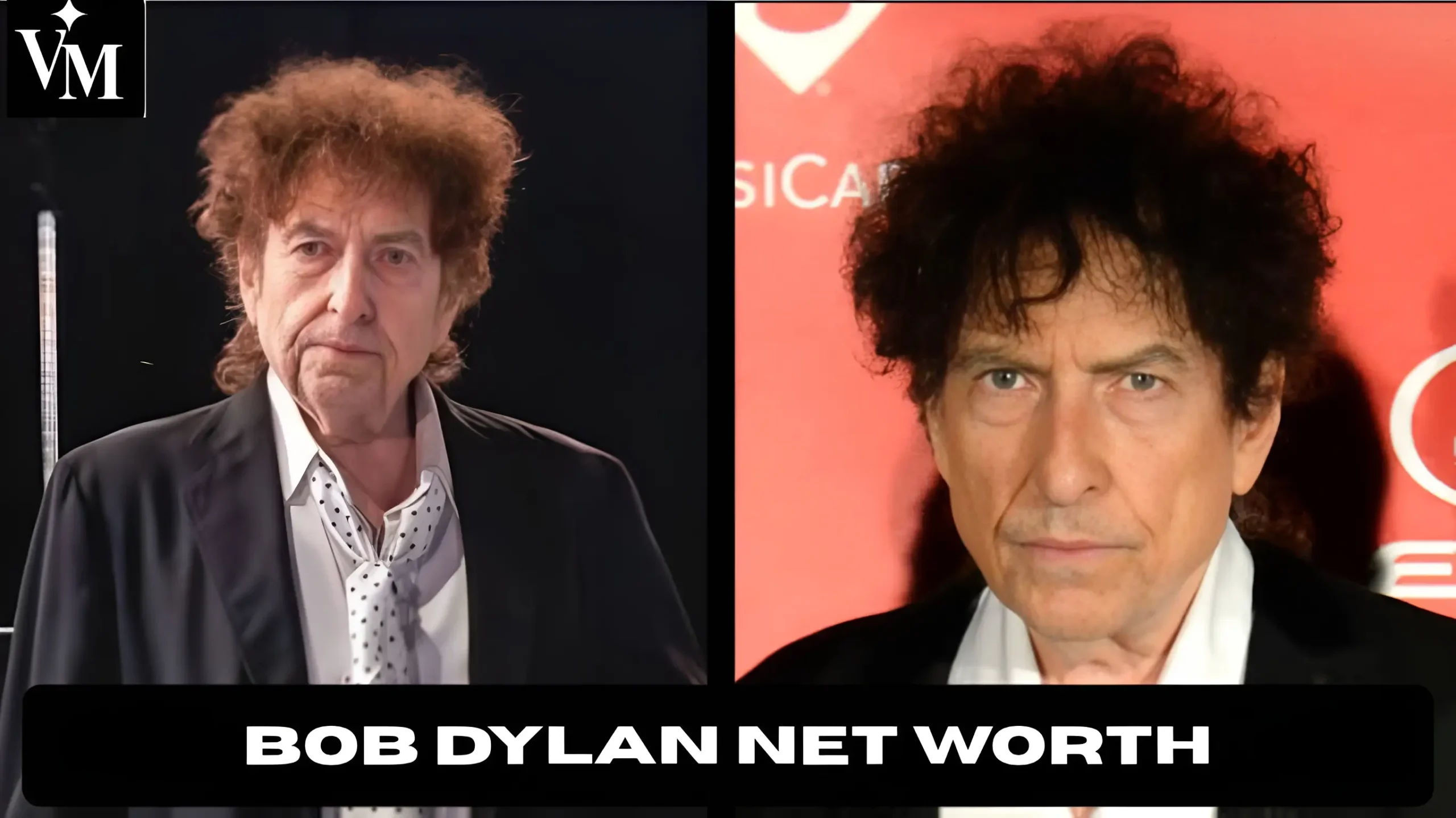
When discussing the wealthiest and most influential musicians in music history, Bob Dylan net worth is a topic that attracts considerable attention. Known for his songwriting, distinctive voice, unforgettable performances, and decades of influence on popular culture, Bob Dylan has built a remarkable career that extends far beyond the recording studio. His financial success reflects more than album sales. It includes songwriting rights, recording catalog transactions, touring, publishing arrangements, and other creative activities developed throughout his lifetime.
As of November 2026, a widely circulated estimate places Bob Dylan’s net worth at approximately $500 million. This figure is an independent estimate rather than an officially confirmed statement from Dylan or his representatives. Nevertheless, two major music catalog transactions involving Universal Music Publishing Group and Sony Music Entertainment help explain why his financial position attracts so much attention. Celebrity Net Worth+2
Dylan’s financial journey is particularly interesting because he built much of his professional reputation during a period when the music industry operated very differently from today’s streaming-driven business. He began his career performing folk music in small venues, gradually developed an international following, and eventually became one of the most respected songwriters in the world.
His story demonstrates how long-term creativity, intellectual property, artistic recognition, and smart management of music rights can contribute to significant financial success.
This article explores Bob Dylan’s estimated net worth, career beginnings, wealth-building strategies, catalog transactions, touring income, creative ventures, and the factors that have helped maintain his financial position. It also includes two financial case studies that explain the business significance of his major catalog deals.
Bob Dylan Net Worth: How Much Is He Worth in 2026?
Bob Dylan’s estimated net worth in 2026 is approximately $500 million, according to the latest widely circulated Celebrity Net Worth estimate, updated on October 30, 2026. However, it is important to understand that this figure has not been confirmed through publicly available personal financial statements. Celebrity Net Worth+1
Net worth generally describes the difference between someone’s assets and liabilities. It is not simply the amount of money that person has earned throughout a career. For a musician such as Dylan, calculating net worth requires considering several different financial elements, including income from music, assets, business arrangements, taxes, management expenses, and other financial obligations.
Dylan’s reported catalog transactions are especially important when examining his wealth. In 2020, Universal Music Publishing Group acquired his songwriting catalog. In 2022, Sony Music Entertainment announced that it had acquired his recorded-music catalog. These were separate business agreements involving different types of music rights.
Although industry reporting placed substantial valuations on both transactions, neither company publicly disclosed the complete financial terms. Therefore, it would be inaccurate to describe the commonly reported transaction values as confirmed personal earnings or assume that every dollar became part of Dylan’s personal wealth.
A $500 million estimate provides a useful general reference, but it should not be interpreted as an exact accounting of his bank balances, investments, properties, or other private assets.
Bob Dylan Net Worth at a Glance
| Category | Details |
|---|---|
| Full name | Bob Dylan |
| Birth name | Robert Allen Zimmerman |
| Date of birth | May 24, 1941 |
| Age in November 2026 | 85 years |
| Birthplace | Duluth, Minnesota, United States |
| Profession | Singer, songwriter, musician, author, and visual artist |
| Main industry | Music and entertainment |
| Estimated net worth | Approximately $500 million |
| Major publishing transaction | Universal Music Publishing Group, 2020 |
| Major recorded-music transaction | Sony Music Entertainment, announced 2022 |
| Major international recognition | Nobel Prize in Literature, 2016 |
Dylan was born in 1941 and developed an interest in American folk music, blues, and songwriting before moving to New York City in 1961. His early recording career began with his self-titled debut album in 1962. Nobel Prize+1
Who Is Bob Dylan?
Let’s Celebrate the Bob Dylan Nobel Win | The New Yorker
Bob Dylan is an American singer-songwriter, musician, author, and visual artist whose work has influenced several generations. Born Robert Allen Zimmerman on May 24, 1941, in Duluth, Minnesota, he became famous for combining traditional musical influences with original songwriting that explored personal experiences, social issues, cultural changes, and political subjects.
Unlike many entertainers whose popularity depends heavily on one particular period, Dylan has maintained an important position in music for more than six decades. His songs have been performed, recorded, interpreted, and studied by musicians, critics, students, and audiences around the world.
His influence is not limited to one musical genre. Although he initially became known through American folk music, his career has included rock, blues, country, gospel, and other musical styles. He has consistently experimented with different sounds rather than remaining associated with only one type of music.
This creative independence has played an important role in his professional identity. Dylan developed a reputation for changing his musical direction, challenging expectations, and approaching songwriting from different perspectives.
His financial achievements are connected to the continued commercial interest in this extensive body of work. Songs created decades ago remain recognizable, while his albums, recordings, books, performances, and artistic projects continue to attract attention.
For anyone researching Bob Dylan’s wealth, understanding his professional history is essential because his fortune was not created through a single successful album or business transaction. It developed through a long career built around original creative work.
Early Life and the Beginning of His Musical Journey
Bob Dylan’s early life provides important context for understanding how he entered the entertainment industry. He grew up in Minnesota, where he developed an interest in music during his childhood and teenage years.
His birth name was Robert Allen Zimmerman. His interest in music expanded as he listened to blues, country, folk, and early rock-and-roll artists. These different influences helped shape his understanding of songwriting and performance.
During his teenage years, Dylan played in different musical groups and became increasingly interested in performing. He admired folk musicians and songwriters who used music to communicate personal experiences and broader social ideas.
His artistic development was influenced by Woody Guthrie, an American folk musician whose work explored ordinary people, economic difficulties, and social conditions. Dylan also developed an interest in literature and poetry, which later became important elements of his songwriting.
In 1961, he moved to New York City and began performing in the Greenwich Village folk scene. The area attracted musicians, writers, and other creative individuals who were interested in traditional music and new forms of artistic expression.
Dylan performed in small clubs and cafés, gradually developing a reputation among music enthusiasts. These early performances did not immediately make him wealthy, but they helped him meet people who could support his professional development.
His talent eventually attracted the attention of record producer John Hammond. Dylan signed a recording agreement, and his first album, Bob Dylan, was released in 1962. The album established his position as a recording artist, even though his early commercial success was relatively modest. Nobel Prize+1
This early period shows that his financial success began with artistic development rather than a large commercial investment. His ability to create original songs and perform them convincingly became the foundation of his career.
The Importance of His First Major Songs
Dylan’s songwriting gradually became more important than his initial reputation as a folk performer. His lyrics addressed subjects that attracted public attention and encouraged listeners to think about social change, identity, freedom, and personal responsibility.
Songs such as “Blowin’ in the Wind” and “The Times They Are A-Changin'” helped establish him as an influential songwriter.
These compositions became valuable parts of his professional catalog. Their long-term recognition contributed to the commercial importance of his songwriting rights and helped establish an audience that would continue discovering his work for generations.
The financial value of a successful song does not end when an album is released. Depending on the rights involved, a composition may continue generating publishing income when it is performed, recorded, reproduced, streamed, or licensed.
This long-term earning potential helps explain why Dylan’s early songwriting became such an important part of his financial story.
How Did Bob Dylan Build His $500 Million Estimated Fortune?
Bob Dylan’s estimated wealth comes from a combination of professional activities developed over several decades. His career has included songwriting, recording, touring, publishing, and other creative projects.
While exact personal income figures are not publicly available, the major sources associated with his financial success can be understood through the structure of the entertainment industry.
1. Songwriting and Music Publishing Rights
Songwriting is one of the most important foundations of Bob Dylan’s financial success.
A songwriter creates the musical composition, which generally includes the lyrics and underlying musical elements. These rights are different from the rights associated with a particular recorded performance.
For example, a song can be performed and recorded by many different artists. The people or businesses controlling the composition rights may receive publishing royalties when the composition is used in qualifying ways.
Dylan has written an extensive collection of original songs, many of which became internationally recognized. This catalog includes music that remains commercially relevant across different generations.
The financial value of songwriting can continue long after the original release because compositions may be used in:
- Music streaming platforms.
- Radio broadcasts.
- Television productions.
- Films and documentaries.
- Commercial advertising.
- Live performances.
- Cover versions by other musicians.
- Physical and digital music releases.
These different uses create opportunities for music publishing income.
One reason Dylan’s songwriting catalog became so valuable is its combination of size, historical significance, commercial recognition, and continued audience interest.
His songs are not simply old recordings that people occasionally remember. They have become part of the wider musical and cultural landscape.
The Universal Music Publishing Deal
One of the most significant financial developments in Dylan’s career occurred in December 2020.
Universal Music Publishing Group announced that it had acquired his entire catalog of songs, covering more than 600 copyrights and approximately six decades of songwriting. The catalog extended from early compositions such as “Blowin’ in the Wind” to later works, including “Murder Most Foul.” UMG+1
The announcement attracted considerable attention because of the scale and historical importance of the agreement.
Universal acquired an extensive collection of songs that had influenced popular music, artists, and audiences around the world. The agreement demonstrated the commercial importance of music publishing rights and the long-term value associated with established songwriting catalogs.
The exact transaction price was not disclosed by Universal. Industry reporting from the period placed the potential value in the region of $300 million to $400 million, while other reporting described a lower estimated figure. These amounts should be understood as outside valuations rather than officially confirmed contract details. Music Business Worldwide+2
For Dylan, the transaction represented a major development in the business side of his musical career. For Universal, the acquisition provided access to an important collection of compositions with continuing commercial and cultural relevance.
This transaction is central to discussions about Bob Dylan net worth because it demonstrates how decades of creative work can become a valuable business asset.
2. Recorded-Music Rights and the Sony Deal
Another important part of Dylan’s financial history involves his recorded-music catalog.
Many people use the terms songwriting rights and recording rights interchangeably, but they are different.
Songwriting rights relate to the underlying composition. Recording rights relate to a particular recorded version of a song, often called the master recording.
A song may have one underlying composition but many different recordings. These recordings can be created by different performers, released on different albums, and distributed through different companies.
This distinction is important when examining Dylan’s second major catalog transaction.
In January 2022, Sony Music Entertainment announced that it had acquired Dylan’s entire back catalog of recorded music. The agreement covered his recordings dating from his 1962 debut through 2020’s Rough and Rowdy Ways. Sony also announced rights involving multiple future new releases. Jan 24, 2022+1
The agreement expanded a professional relationship between Dylan and Sony that had continued for approximately six decades.
Unlike the earlier publishing agreement with Universal, this transaction focused on the recorded-music catalog.
Industry reporting associated the Sony transaction with an estimated value of $150 million to $200 million. However, Sony did not publicly disclose the contract price, and the reported valuation should not be confused with a confirmed payment received by Dylan. Yahoo Finance+1
The agreement attracted attention because it involved an extensive collection of recordings that had remained commercially important over many decades.
Sony gained control of an important recorded-music collection, while Dylan’s catalog became part of a major music company’s wider distribution and catalog-management activities.
The deal also reflected the growing commercial interest in established music catalogs.
3. Touring and Live Concert Performances
Live performances have been another important part of Bob Dylan’s career.
Touring has played an important role in the music industry for generations. Although recordings allow musicians to reach international audiences, concerts create opportunities to earn income through ticket sales and related commercial arrangements.
Dylan has spent a considerable portion of his career performing for audiences across different countries. His touring history includes numerous concerts, international appearances, and extended performance periods.
His long-running touring activity has often been associated with the term “Never Ending Tour,” reflecting the continuous nature of his commitment to live performance.
Concert income can come from different sources:
Ticket sales: The sale of concert tickets represents an important source of potential revenue for major performers. Ticket prices, venue capacity, demand, and the commercial arrangements surrounding each event influence the amount generated.
Touring agreements: Artists generally work with promoters, managers, agents, venues, and production teams. The financial arrangements determine how income is distributed and which expenses are deducted.
Merchandise: Concert merchandise may include clothing, posters, accessories, and other items associated with the performer or tour.
International performances: Appearing in different countries provides opportunities to reach audiences who might not attend domestic concerts.
However, it is important not to assume that an artist personally receives the full amount collected from ticket sales. Concert operations involve substantial costs, including transportation, staffing, equipment, production, venue expenses, and management arrangements.
Dylan’s touring activity has therefore contributed to his wider professional income over the years, even though the exact amount he earned from individual concerts is not publicly established.
His continued touring also demonstrates the lasting demand for his work. As of November 2026, his official website lists an active European concert schedule extending into December, although individual dates and arrangements can change. The Official Bob Dylan Site+1
4. Album Sales and Music Streaming
Album sales were an important part of Dylan’s career, particularly during the years when physical music formats dominated the recording industry.
He released his debut album in 1962 and followed it with a series of influential recordings. Albums such as The Freewheelin’ Bob Dylan, Highway 61 Revisited, Blonde on Blonde, and Blood on the Tracks became important milestones in his musical development.
These releases helped establish a catalog that would continue attracting attention after the original albums were released.
Physical music sales traditionally generated income through record sales, licensing arrangements, distribution agreements, and royalties. The exact amount received by an artist depended on the contractual structure and the rights involved.
The industry later changed significantly with the growth of digital downloads and streaming services.
Today, audiences can access recordings through various streaming platforms. This makes older recordings available to listeners who may never have purchased the original vinyl albums or CDs.
Dylan’s established catalog benefits from this continued availability. His most recognized songs can be discovered by new audiences, while dedicated listeners can explore albums, live performances, and historical recordings.
Streaming is not necessarily as profitable per individual play as a traditional album purchase. Nevertheless, a large catalog with lasting audience interest can remain commercially valuable over an extended period.
The popularity of classic recordings also supports compilation albums, remastered editions, special releases, and other products connected to an artist’s existing work.
For Dylan, recorded music has been an important part of the foundation on which his wider financial success was built.
5. Reissues and the Bootleg Series
Another notable part of Dylan’s recording career is the Bootleg Series.
The series includes previously unreleased recordings, alternate versions, live performances, and material from different periods of his professional life.
The collection offers something different from an ordinary greatest-hits album. It allows fans and music enthusiasts to explore the development of songs, recording sessions, and performances that were not always available through standard releases.
The series began in 1991, and Sony’s announcement concerning the recorded-music catalog specifically highlighted continued collaboration around future catalog reissues. Sony Music+1
These types of releases can be commercially important because they provide existing fans with additional material while introducing new listeners to the artist’s history.
They also demonstrate how an established music catalog can remain relevant through careful presentation and renewed distribution.
Rather than relying entirely on new studio albums, an artist with an extensive archive can continue developing projects around previously recorded material.
This strategy is not limited to Dylan. It is used across the music industry, where historical recordings, anniversary editions, live performances, and previously unreleased material can become valuable products.
Case Study 1: Bob Dylan and the Universal Music Publishing Acquisition
Episode 15: Rare Early 60s Performances — Definitely Dylan
Case study focus: The business value of an established songwriting catalog.
The 2020 Universal Music Publishing acquisition provides an important example of how songwriting can create substantial long-term commercial value.
Dylan spent decades developing a catalog that included hundreds of original compositions. His songs became associated with different musical movements, historical periods, and generations of listeners.
The catalog was commercially attractive for several reasons.
First, it contained a large collection of compositions. Universal’s announcement identified more than 600 copyrights spanning approximately 60 years. This gave the publishing company access to a broad body of creative work rather than a small collection of individual songs. UMG
Second, many compositions had demonstrated long-term popularity. Songs that remain recognized decades after their release can continue attracting listeners, performers, and licensing opportunities.
Third, the catalog offered opportunities for different types of commercial use. Depending on the rights and licensing arrangements, music publishers can earn income when compositions are used in media, performed publicly, recorded by other musicians, or distributed through qualifying platforms.
Fourth, Dylan’s reputation made his catalog particularly significant. Buyers evaluating established music rights may consider the artist’s historical influence, commercial recognition, and the likelihood that future audiences will continue listening to the music.
What does this case study demonstrate?
It shows that songwriting can become an asset with value beyond an artist’s immediate recording career.
A successful composition may be commercially relevant for decades. When a songwriter owns important rights in hundreds of such compositions, the resulting catalog can attract major business interest.
The transaction also illustrates why established musicians sometimes sell or restructure ownership of their music rights.
Such a decision may provide a large upfront financial payment while allowing another company to manage the future commercial use of the catalog.
It does not mean every musician should sell their publishing rights. The decision depends on personal financial needs, ownership arrangements, career plans, tax considerations, and the potential future value of the music.
For Dylan, the Universal agreement became one of the defining financial events associated with his later career.
Case Study 2: The Sony Recorded-Music Acquisition
American Masters | No Direction Home: Bob Dylan | Season 19 | PBS
Case study focus: Understanding the commercial value of master recordings.
The Sony Music Entertainment agreement provides a different example of music-related asset management.
In January 2022, Sony announced that it had acquired Dylan’s back catalog of recorded music. The agreement covered recordings from his debut in 1962 through Rough and Rowdy Ways, released in 2020. Jan 24, 2022+1
The transaction is significant because it involved recorded performances rather than simply the underlying compositions.
A master recording represents a specific recorded version of a musical performance. These recordings can be distributed through albums, digital services, reissues, compilations, and other commercial channels, subject to the rights and licensing arrangements in place.
Dylan’s recorded catalog was particularly attractive because it contained material from an unusually long and influential career.
An established recording catalog may offer several commercial advantages:
- It includes music with existing audience recognition.
- It may attract new listeners through streaming platforms.
- It can support remastered and anniversary editions.
- It offers opportunities for historical collections and special releases.
- It allows a music company to manage an extensive body of recordings through established distribution systems.
The Sony announcement also highlighted future releases and continued collaboration on Dylan’s Bootleg Series.
This demonstrates that catalog acquisitions are not necessarily limited to purchasing old recordings and distributing them again. They may involve continuing relationships that support future commercial projects.
What does this case study demonstrate?
The Sony transaction shows that recorded music is a distinct category of intellectual property with its own commercial value.
It also highlights why the Universal and Sony agreements should not be treated as the same transaction.
One involved songwriting and publishing rights, while the other involved recorded music. Their separate structures help explain how Dylan’s professional catalog became such an important part of discussions about his wealth.
6. Books, Writing, and Literary Recognition
Bob Dylan is widely recognized as a musician, but his professional identity also includes writing and literature.
His creative output extends beyond songs and recordings. Over the years, he has been associated with books, written works, and projects that reflect his interests in culture, storytelling, and artistic expression.
One of his major literary achievements came in 2016, when he was awarded the Nobel Prize in Literature.
The Nobel Prize committee recognized him for creating new poetic expressions within the great American song tradition. This was a historic moment because it brought international literary recognition to a musician and songwriter whose primary creative medium was popular music. Nobel Prize+1
The award increased public attention to the literary significance of his work.
Although receiving the Nobel Prize should not be treated as a direct explanation for his overall net worth, it reinforced his international reputation and cultural importance.
Recognition of this kind can strengthen the long-term interest in an artist’s catalog, books, exhibitions, and other creative projects.
Dylan’s writing has also contributed to the public’s understanding of his career. His work is frequently discussed in relation to American history, poetry, music, and social change.
The literary dimension of his career demonstrates that his professional success cannot be understood solely through album sales and concerts.
He became an influential cultural figure through the combination of songwriting, performance, and creative expression.
7. Bob Dylan as a Visual Artist
An interesting aspect of Dylan’s professional life is his involvement in visual art.
He has produced drawings, paintings, and sculptures over the years. Although music remains the activity most closely associated with his public identity, his artistic interests extend into other creative fields.
According to his official art website, Dylan has been producing visual art since the early 1960s, with his first gallery exhibition taking place in 2007. His subsequent artistic work has included drawing, painting, and sculpture. Bob Dylan
This side of his career provides another reason why discussions of his professional achievements extend beyond music.
Visual art has its own commercial market, where the value of a work may depend on factors such as originality, artistic recognition, provenance, condition, exhibition history, and collector interest.
For an internationally recognized figure, original artwork may attract attention from collectors and galleries.
However, publicly available information does not provide a reliable breakdown of how much Dylan has earned through the sale of paintings or sculptures.
Therefore, it would be misleading to assign a specific amount to his visual-art income without verified financial records.
The more important point is that Dylan has continued developing creative activities outside the recording industry.
These projects contribute to his wider professional legacy and show the range of his interests as an artist.
8. Awards and Achievements That Strengthened His Career
Bob Dylan’s professional reputation has been supported by numerous awards and major cultural honors.
Recognition does not automatically translate into a particular net-worth figure, but it can influence the commercial importance of an artist’s work.
Dylan was inducted into the Rock & Roll Hall of Fame in 1988. The institution recognizes his major contribution to popular music, songwriting, folk-rock, and the development of modern musical expression. Rock & Roll Hall of Fame
His achievements also include the Nobel Prize in Literature in 2016.
These honors reflect the influence of his work across different artistic communities.
Major Professional Milestones
Some of the most important milestones in Dylan’s career include:
- 1962: Released his self-titled debut album.
- 1963: Released The Freewheelin’ Bob Dylan.
- 1965: Released Bringing It All Back Home and Highway 61 Revisited.
- 1966: Released Blonde on Blonde.
- 1975: Released Blood on the Tracks.
- 1988: Inducted into the Rock & Roll Hall of Fame.
- 1991: The Bootleg Series began.
- 2016: Received the Nobel Prize in Literature.
- 2020: Released Rough and Rowdy Ways and entered into the Universal publishing catalog agreement.
- 2022: Sony announced its acquisition of his recorded-music catalog.
These milestones demonstrate the length and consistency of Dylan’s professional career.
His influence has continued across generations, helping maintain interest in his recordings and creative work.
9. The Role of Intellectual Property in Bob Dylan’s Wealth
Intellectual property is one of the most important concepts when examining the financial success of musicians.
Intellectual property refers to creative work and the legal rights associated with it.
For musicians, these rights may include compositions, lyrics, musical recordings, performances, trademarks, and other commercial interests.
Dylan’s career illustrates how valuable these rights can become when an artist creates an extensive body of commercially successful work.
A musician may earn money from a song in several different ways, depending on the ownership structure and agreements involved.
For example, a composition may generate publishing income when it is played publicly, covered by another musician, or licensed for use in certain productions.
A recording may generate revenue through physical sales, digital distribution, streaming, and licensing arrangements.
The two major catalog transactions associated with Dylan demonstrate that these different rights can be commercially valuable in separate ways.
This distinction also explains why catalog acquisitions attract investors and music companies.
Rather than relying entirely on new music releases, buyers may acquire existing catalogs that have an established history of audience interest.
However, intellectual property transactions are complicated. The actual value of a catalog depends on ownership, contractual obligations, royalty arrangements, licensing rights, and future commercial expectations.
Dylan’s experience shows how a successful creative career can produce intellectual property that remains economically important long after the original songs were written.
10. Does Bob Dylan Still Earn Money After Selling His Music Catalogs?
This is one of the most important questions surrounding Bob Dylan’s wealth.
Some readers assume that selling a music catalog means an artist completely stops earning money from music. That assumption is too simplistic.
The financial consequences depend on the rights included in the transaction, the terms of the agreement, and any rights or arrangements that continue after the sale.
Dylan’s two major catalog transactions involved different categories of music rights.
Universal acquired his songwriting catalog, while Sony acquired his recorded-music catalog. Public announcements described the scope of the acquisitions, but they did not provide every detail of the contracts.
Consequently, it is not possible to establish a complete public breakdown of which royalties, permissions, or future financial interests Dylan may retain under each agreement.
Nevertheless, there are several reasons why an artist with Dylan’s career can remain financially active after major catalog transactions.
Future performances: Live performances may continue generating income through contractual arrangements.
New creative projects: Artists can continue writing, recording, collaborating, and releasing new material, depending on their agreements.
Books and visual art: Separate creative activities may generate income outside the original music rights transactions.
Other assets: Wealth can include financial investments and assets unrelated to music publishing or recording ownership.
Existing contractual arrangements: The precise financial effect of any catalog sale depends on the contract rather than the general concept of selling music rights.
It is therefore more accurate to say that Dylan completed major transactions involving his historic music catalogs, rather than assuming that he stopped earning from all musical activities.
11. Why Bob Dylan’s Music Catalog Became So Valuable
The value of a music catalog is influenced by more than the number of songs it contains.
A catalog with hundreds of recordings may be less attractive than a smaller collection containing music with strong long-term commercial demand.
Several characteristics make Dylan’s body of work especially significant.
Long-Term Popularity
Many artists experience a period of intense popularity followed by a decline in public attention.
Dylan’s music has remained relevant over several generations. His songs are still discussed, performed, recorded, and discovered by audiences with different musical interests.
This sustained recognition increases the potential commercial importance of his catalog.
Historical Significance
Dylan’s music has a place in the history of American popular music.
His early songwriting became associated with the folk movement and broader cultural conversations of the 1960s.
His later work demonstrated a willingness to change musical direction and explore different creative ideas.
This history gives the catalog cultural importance beyond ordinary commercial performance.
Broad Audience Appeal
His work attracts several different types of listeners.
Some audiences are interested in his early folk recordings, while others prefer his rock albums, country influences, later studio releases, or live performances.
This diversity helps sustain interest in his music.
Influence on Other Musicians
Dylan’s songs have been covered and interpreted by many other performers.
Cover versions can introduce original compositions to people who may not have listened to the original recordings.
This reinforces the long-term visibility of his songwriting.
Extensive Body of Work
An artist with a long and successful career can develop a substantial catalog of compositions and recordings.
Dylan’s work covers decades, giving companies opportunities to distribute and promote music from different stages of his professional life.
Together, these factors help explain why major music companies showed interest in his publishing and recorded-music rights.
12. Bob Dylan Net Worth Compared With Other Sources of Music Income
Understanding Dylan’s estimated wealth becomes easier when examining the different ways musicians can earn money.
Not every successful musician follows the same financial model.
Some performers earn most of their income through touring. Others depend heavily on songwriting royalties, recording contracts, production work, or business ventures.
Dylan’s career represents a combination of several of these models.
Income From Songwriting
Songwriting can become an important long-term financial asset.
A successful composition may continue generating royalties for many years, depending on the rights and licensing structure.
Income From Live Performances
Concerts create revenue opportunities through ticket sales and related agreements.
However, touring can also involve high expenses and complex financial arrangements.
Income From Recorded Music
Albums, digital releases, streaming, and catalog distribution can generate revenue over time.
Income From Intellectual Property Transactions
An artist who owns valuable rights may sell or otherwise restructure those rights through major business agreements.
Dylan’s Universal and Sony transactions demonstrate the scale of financial activity that established catalogs can attract.
Income From Other Creative Activities
Books, artwork, and related projects can create additional commercial opportunities.
The important difference is that income and wealth are not identical.
A musician may generate large amounts of revenue without retaining the same amount as personal wealth. Taxes, business expenses, management arrangements, professional costs, and other financial obligations influence the final amount.
This is why a net-worth estimate should not be confused with lifetime career revenue.
13. Was Bob Dylan Ever a Billionaire?
There is no reliable public confirmation that Bob Dylan is a billionaire.
His frequently reported net-worth estimate in 2026 is approximately $500 million, which places him among the wealthiest musicians but below the billion-dollar level. Celebrity Net Worth
The large valuations associated with his music catalog transactions may create confusion.
Some reports placed the Universal publishing deal in the hundreds of millions of dollars, while industry reporting placed the Sony recorded-music transaction in another substantial range.
However, adding reported transaction valuations does not establish that Dylan personally retained an equal amount of money.
Several important differences must be considered.
First, transaction value is not necessarily the same as an artist’s net proceeds.
Second, income from a major deal may be subject to taxes and professional expenses.
Third, the musician’s ownership structure and contractual arrangements affect the amount ultimately received.
Fourth, net worth includes both assets and liabilities, not only income from music transactions.
A billionaire classification would require evidence that Dylan’s total assets, after accounting for liabilities, exceed one billion dollars.
Without verified financial disclosures or credible evidence supporting that conclusion, it is more accurate to describe him as a musician with an estimated fortune of approximately $500 million.
14. What Can Be Learned From Bob Dylan’s Financial Success?
Bob Dylan’s career provides several interesting lessons about long-term wealth creation.
His story is particularly useful because it involves more than short-term popularity or a successful business launch.
It demonstrates how professional consistency and ownership of creative work can create lasting financial opportunities.
Building Valuable Skills Takes Time
Dylan spent years developing his songwriting and performance abilities.
His early career involved small performances, experimentation, and gradual professional growth.
This demonstrates that long-term success often begins with developing a skill that can provide value to an audience.
Original Work Can Become a Long-Term Asset
One of the most important aspects of Dylan’s career is the commercial importance of his original compositions.
Songs can remain valuable long after their creation, particularly when they attract continued interest.
This principle applies to other creative industries as well. Writers, designers, filmmakers, and digital creators can also develop intellectual property with long-term potential.
Diversifying Creative Activities Creates Opportunities
Dylan has been involved in music, writing, performance, and visual art.
These activities demonstrate how a creative career can develop across different fields.
Although they do not all generate the same level of income, they broaden an artist’s professional identity.
Reputation Can Support Commercial Value
Dylan’s international recognition has strengthened the cultural significance of his work.
Awards, critical recognition, and audience interest can contribute to the long-term visibility of an artist’s creative catalog.
Understanding Ownership Is Important
The Universal and Sony agreements show why understanding intellectual property rights matters.
Ownership can influence how creative work generates revenue, how it is licensed, and how it may be transferred to another company.
For musicians, knowing what rights they own and what rights they are transferring can have major financial consequences.
15. What Could Influence Bob Dylan’s Net Worth in the Future?
Bob Dylan’s estimated fortune may change over time, although predicting the exact direction or size of any future change is difficult.
Several factors could influence his financial position.
Future creative projects: New recordings, collaborations, books, and other artistic activities may create additional business opportunities.
Touring: Live performances can continue contributing to professional income, subject to health, scheduling, demand, and contractual arrangements.
Music catalog performance: The ongoing commercial use and distribution of his existing recordings may influence the financial outcomes associated with the catalog transactions.
Visual art and other creative work: His artistic activities outside music may remain relevant to his broader professional career.
Investments and financial management: A person’s overall wealth may change because of investment performance, financial decisions, property values, and expenses.
Taxes and legal obligations: Financial obligations can influence the difference between gross income and actual retained wealth.
It is also possible that third-party net-worth estimates will change without any major new financial event.
These websites sometimes revise their figures when new reports appear or when their calculation methods change.
For that reason, readers should distinguish between a verified business announcement and an updated online estimate.
The exact value of Dylan’s wealth may remain private, even as new information about his professional activities becomes publicly available.
Frequently Asked Questions About Bob Dylan Net Worth
1. What is Bob Dylan’s net worth in 2026?
Bob Dylan’s estimated net worth in 2026 is approximately $500 million. This amount is based on a widely circulated third-party estimate updated on October 30, 2026. It is not an officially confirmed figure from Dylan or his representatives. His songwriting catalog, recorded-music transactions, and decades of professional activity help explain the estimate. Celebrity Net Worth
2. How did Bob Dylan become so wealthy?
Bob Dylan built his wealth through a long career as a singer-songwriter, recording artist, and performer. His financial success is associated with songwriting, album sales, touring, music distribution, and major catalog transactions involving Universal Music Publishing Group and Sony Music Entertainment.
3. How much did Bob Dylan receive from selling his music catalog?
The exact amounts paid under the catalog agreements have not been publicly confirmed by the companies. Industry reporting placed the Universal publishing agreement in the range of hundreds of millions of dollars, while reports associated the Sony recorded-music transaction with approximately $150 million to $200 million. These are reported valuations, not verified personal proceeds. Music Business Worldwide+2
4. Did Bob Dylan sell all his songwriting rights?
Universal Music Publishing Group announced in December 2020 that it had acquired Dylan’s entire catalog of songs, covering more than 600 copyrights. The full contractual details were not publicly disclosed, so the precise rights and financial arrangements should not be assumed beyond the company’s announcement. UMG
5. Did Bob Dylan sell his master recordings?
Yes. Sony Music Entertainment announced in January 2022 that it had acquired Dylan’s entire back catalog of recorded music, including recordings dating from his 1962 debut through Rough and Rowdy Ways. The transaction was separate from the earlier Universal publishing agreement. Jan 24, 2022
6. How old is Bob Dylan in 2026?
Bob Dylan is 85 years old as of November 2026. He was born on May 24, 1941, in Duluth, Minnesota. His career began in the early 1960s, and he has remained an influential figure in music for more than six decades. Nobel Prize
7. What was Bob Dylan’s first album?
His debut album was Bob Dylan, released in 1962. It introduced his early recording style and helped establish his professional career. Although it was not initially a major commercial success, it became the starting point of a career that later produced several influential albums and songs. Nobel Prize
8. What are Bob Dylan’s most famous songs?
Some of Bob Dylan’s best-known songs include “Blowin’ in the Wind,” “The Times They Are A-Changin’,” “Like a Rolling Stone,” “Knockin’ on Heaven’s Door,” and “Tangled Up in Blue.” These compositions helped establish his reputation as an influential songwriter and remain important parts of his musical catalog.
9. Did Bob Dylan win the Nobel Prize?
Yes. Bob Dylan received the 2016 Nobel Prize in Literature. The award recognized his contribution to creating new poetic expressions within the great American song tradition. The recognition was a major achievement in his career and highlighted the literary importance of songwriting. Nobel Prize
10. Does Bob Dylan still perform live?
Yes. Dylan has continued performing in his later years. His official website has listed international performances, including European dates in November and December 2026. Concert schedules can change, so the official tour page is the best place to verify current dates. The Official Bob Dylan Site
11. Does Bob Dylan still earn money from his old songs?
His music remains commercially important, but the exact income he currently receives from his historic songwriting and recording catalogs is not publicly available. Universal and Sony acquired different categories of music rights through separate agreements. The financial consequences depend on the private terms of those transactions and any continuing arrangements.
12. Is Bob Dylan one of the richest musicians in the world?
Bob Dylan is among the wealthiest musicians according to widely circulated net-worth estimates. His estimated $500 million fortune reflects decades of songwriting, recording, performing, and valuable music-related transactions. However, comparisons with other musicians should be treated carefully because public net-worth figures are estimates rather than audited financial statements.
13. What makes Bob Dylan’s music catalog valuable?
His catalog includes hundreds of compositions and a large collection of recordings developed over several decades. Many of his songs have maintained international recognition and cultural influence. Their continued use, distribution, and historical importance make his music catalog commercially significant.
14. Did Bob Dylan make money outside music?
Dylan has also been involved in writing and visual art. His creative activities include books, paintings, drawings, and sculptures. These pursuits expand his artistic career beyond recording and live performance, although exact earnings from his non-musical activities have not been publicly established. Bob Dylan
15. Why is Bob Dylan’s net worth difficult to calculate?
His personal financial records are not publicly available in a way that allows an exact calculation. Public estimates may consider reported catalog transactions, career income, and other possible assets, but they cannot fully account for private investments, taxes, expenses, ownership structures, or liabilities. Therefore, the $500 million figure should be treated as an estimate.
Final Thoughts on Bob Dylan Net Worth
Bob Dylan’s estimated net worth of approximately $500 million in 2026 reflects the financial possibilities created by a remarkable career in music and the arts.
His journey began with small performances in New York City and developed into an international career that influenced songwriting, popular music, and literary culture. Over the decades, he produced an extensive collection of songs and recordings that became valuable creative assets.
The two major catalog transactions involving Universal Music Publishing Group and Sony Music Entertainment further demonstrate the commercial significance of his work. These agreements involved different categories of music rights and attracted substantial reported valuations, although their exact financial terms were not publicly disclosed.
Beyond these transactions, Dylan’s professional history includes live performances, album releases, writing, and visual art. His continued cultural relevance has helped maintain interest in his work across multiple generations.
Ultimately, Bob Dylan’s financial story is not simply about how much money a famous musician can earn. It also illustrates how original creative work, long-term recognition, and valuable intellectual property can develop into significant financial assets.
Although his exact personal wealth remains private, the widely circulated $500 million estimate provides a useful indication of the scale of his financial success. His legacy, however, extends far beyond any net-worth calculation and remains one of the most important in modern music history.
For More Visits: Value Magazine

