



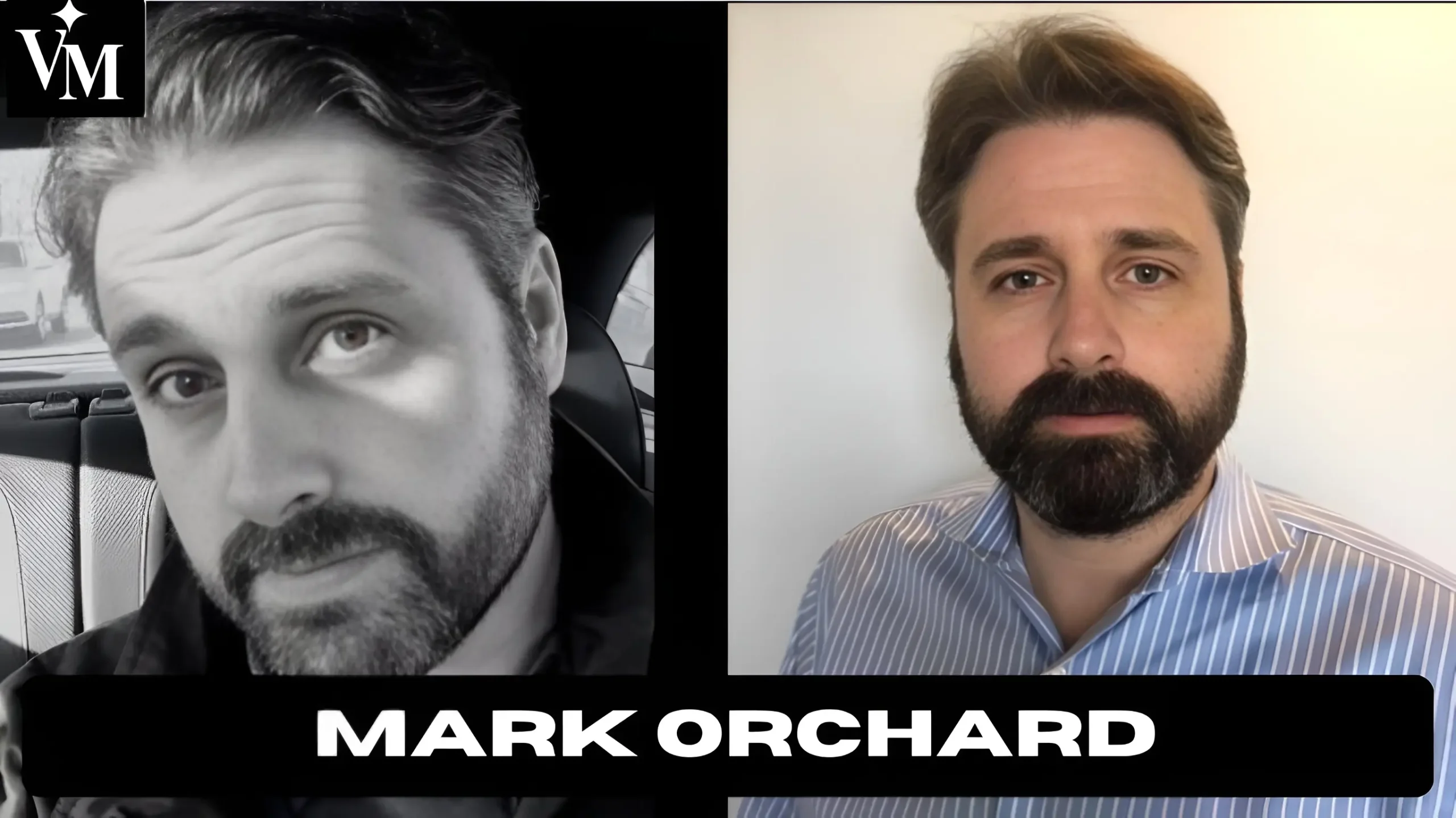
In an era when broadcast journalism faces unprecedented challenges and transformation, few professionals have demonstrated the adaptability, expertise, and commitment to journalistic excellence that Mark Orchard embodies. As the Senior Broadcast Producer for Full Measure with Sharyl Attkisson, Mark Orchard has become an instrumental force in shaping one of America’s most respected investigative news programs. Yet his influence extends far beyond his current role—his three-decade career trajectory reveals a mastercraftsman of broadcast journalism who has fundamentally understood and anticipated the industry’s evolution while maintaining unwavering dedication to truthful, impactful storytelling.
Mark Orchard’s career represents something increasingly rare in modern media: a comprehensive understanding of global journalism combined with deep expertise in production excellence. While many in the industry recognize his connection to TODAY show co-anchor Savannah Guthrie, this association often overshadows his extraordinary professional achievements and the substantial impact he has made across multiple continents and major news organizations. This article explores the remarkable career of Mark Orchard, examining how his strategic positioning within the global news ecosystem has influenced broadcast journalism and what his professional journey reveals about the future of quality news production.
Early Career Foundation: Building Expertise in the Digital Age
Mark Orchard’s professional foundation was constructed with impressive rigor and intentionality. His educational background at University College London, where he studied Philosophy, provided him with the analytical frameworks and critical thinking capabilities essential for evaluating complex news stories. This philosophical training distinguished him from many broadcast professionals who lacked this contemplative, systematic approach to understanding human behavior, institutional dynamics, and ethical considerations—elements that prove invaluable when producing stories about government accountability, corporate malfeasance, and institutional power.
Following his university studies, Orchard pursued formal broadcast journalism training with Independent Television News (ITN), one of the United Kingdom’s most prestigious news organizations. ITN’s training programs are renowned for their rigor and emphasis on journalistic standards. This early institutional exposure immersed Orchard in a broadcast environment where accuracy, verification, and ethical journalism weren’t aspirational values but operational necessities. The combination of philosophical training and ITN’s rigorous journalism standards created a professional foundation that would characterize his entire career trajectory.
Rather than pursuing on-camera talent positions—which often represent the most visible path in broadcast journalism—Orchard made a strategic decision early in his career that would ultimately prove far more consequential: he focused on production expertise. This choice reflected either exceptional foresight or deep self-awareness about where his greatest contributions could occur. Production roles offer control over storytelling architecture, editorial decision-making, and long-term strategic direction in ways that on-camera positions do not. For someone with Orchard’s philosophical background and commitment to journalistic standards, production provided the optimal platform for influence.
BBC Years: Establishing Global Expertise
The decade Mark Orchard spent at BBC News represented the development phase of his professional maturity. Working as a senior producer across multiple global hubs—including London, Paris, Johannesburg, Los Angeles, and Washington, D.C.—Orchard gained something increasingly rare in contemporary journalism: authentic international experience. Unlike journalists who parachute into foreign assignments, Orchard’s sustained presence in diverse newsrooms across different continents provided nuanced understanding of how news is gathered, evaluated, and presented across varied political systems, media ecosystems, and cultural contexts.
His assignment as a traveling member of the White House press corps during President George W. Bush’s first term proved particularly significant. This position required not only technical broadcast production skills but also sophisticated understanding of government communications, political messaging, national security protocols, and the complex dynamics between journalists and government officials. The White House beat is among the most demanding in American journalism—it requires understanding complex policy, navigating access constraints, identifying consequential stories amid deliberate informational noise, and maintaining relationships that facilitate reporting while preserving editorial independence.
Working from major newsrooms during this period meant Orchard was simultaneously developing expertise in:
- Advanced news gathering techniques and source development strategies
- Cross-cultural communication and international news standards
- Complex editorial decision-making in high-stakes news environments
- Leadership and mentoring within competitive newsroom hierarchies
- Technology integration as broadcast systems evolved during the early 2000s
- Managing news production during breaking news and crisis situations
The BBC experience established Mark Orchard not merely as a technician or procedural executor, but as a strategic thinker deeply versed in how major news organizations operate and innovate. This institutional knowledge would prove invaluable during the disruptive period that followed.
Al Jazeera: Innovation and Pioneering Work
The career of Mark Orchard took on renewed significance when he became part of the launch teams for both Al Jazeera English and Al Jazeera America. These weren’t lateral career moves—they represented opportunities to build news organizations from foundational stages. Launch environments in journalism are particularly demanding because they require simultaneous development of technical infrastructure, editorial standards, organizational culture, and talent acquisition, all while establishing credibility in competitive markets.
Al Jazeera English’s launch in 2006 represented an ambitious attempt to establish a truly global news network with editorial independence and international reporting capacity. Mark Orchard’s involvement in this venture indicated that major organizational leaders recognized his capabilities beyond standard production work. Building a news network from inception requires understanding not just how to produce stories, but how to architect systems that can scale, how to train diverse international teams in consistent editorial standards, and how to navigate the complex geopolitical dimensions of international broadcasting.
His subsequent role as Executive Producer for America Tonight further expanded his portfolio. America Tonight was an investigative documentary program designed to showcase in-depth reporting on American issues. This positioned Orchard at the intersection of breaking news production and documentary journalism—two disciplines with different rhythms, audiences, and production methodologies. The ability to work effectively across these formats suggests sophisticated understanding of how different story lengths, production timelines, and narrative structures serve different journalistic purposes.
The Al Jazeera experience represented a critical inflection point in understanding Mark Orchard’s professional philosophy. While mainstream American broadcasters faced increasing pressure to optimize for ratings and advertising revenue, Al Jazeera—despite its own commercial pressures—positioned investigative depth and global reporting as core value propositions. Orchard’s choice to commit to this venture revealed priorities that transcended pure career advancement: this was a choice for journalism-first positioning during a period when such choices became increasingly costly.
Full Measure: Specialized Expertise and Impact
Since joining Sinclair Broadcast Group in 2016 to lead production for Full Measure with Sharyl Attkisson, Mark Orchard has presided over a program that has established itself as one of American television’s most respected investigative news broadcasts. Full Measure’s focus on federal spending, national security, and American politics represents precisely the domains where production expertise becomes most consequential—these topics demand rigorous verification, sophisticated source development, clearance navigation, and complex editorial decision-making.
Investigative journalism production differs fundamentally from breaking news production or feature reporting. Investigations often extend over months or years, involve multiple story threads and supporting characters, require coordination across diverse sources and jurisdictions, and necessitate navigation of potential legal and security complications. The producer’s role in investigations is not merely logistical—it is fundamentally editorial, requiring judgment about what constitutes sufficient verification, which narrative paths warrant pursuing, when a story is ready for broadcast, and how to structure complex information for public understanding.
That Mark Orchard was selected to lead production for Full Measure rather than merely serve as a technical producer indicates the program’s recognition that effective investigative journalism production requires strategic, senior-level expertise. The program’s sustained reputation for rigorous reporting reflects in part the production leadership that Orchard provides. Full Measure operates in an increasingly polarized information environment where accusations of bias plague major news organizations. Sustaining credibility under these conditions requires production processes that prioritize verification, source diversity, and editorial integrity—precisely the values that characterize Orchard’s career trajectory.
The Professional Transition from On-Camera to Behind-Camera
One particularly insightful dimension of Mark Orchard’s career involves his strategic positioning entirely in production roles rather than on-camera talent positions. In broadcast journalism’s professional culture, on-camera talent often receives disproportionate recognition, compensation, and industry prestige. Yet Orchard’s career demonstrates that the most consequential influence often flows from production.
Consider the functional reality: producers determine which stories are covered, how they are researched, what evidence is examined, how complex information is simplified for public understanding, what narrative arcs are selected, and ultimately whether journalism serves public understanding or particular audiences’ existing beliefs. Producers work on multiple stories simultaneously, developing long-term relationships with sources, anticipating story developments, and making strategic editorial choices constantly. On-camera talent, by contrast, presents stories that producers have structured and determined worthy of air time.
This isn’t to diminish on-camera work—skilled broadcast journalists play essential roles in public communication. Rather, it’s to recognize that Mark Orchard’s career choice to remain in production reflected either genuine preference for this work or sophisticated understanding of where genuine influence resides in broadcast journalism. His sustained success across multiple major organizations suggests this choice was well-calibrated to his abilities and ambitions.
Demonstrable Impact on Broadcast Journalism Standards
Evaluating Mark Orchard’s impact on broadcast journalism requires moving beyond individual stories to examine institutional patterns. Several indicators suggest his influence has been substantial:
Institutional Continuity and Advancement. Orchard hasn’t merely held positions—he has remained in roles sufficiently long to implement systematic changes and be entrusted with increasingly senior responsibilities. A decade at BBC, years at Al Jazeera, and persistent leadership at Full Measure indicates that his employers have consistently recognized his contributions as valuable enough to retain and advance him. In industry terms, this represents a form of validation that institutional leaders believe he makes organizations more effective.
International Expertise Transfer. Orchard’s movement between British, international, and American news organizations positioned him to transfer best practices across different media ecosystems. BBC standards, Al Jazeera’s investigative approaches, and American broadcast norms each have distinctive strengths. Professionals who work across these environments carry knowledge that others—working in single systems—cannot acquire. This transfer of expertise contributes to industry-wide improvement in journalistic practices.
Investigative Program Leadership. Leading production for Full Measure specifically positions Orchard at the center of investigative journalism during a period when investigative reporting has become increasingly rare and expensive. The program’s sustained credibility and influence reflect production decisions that ensure quality, rigor, and public trust.
Adaptation to Technological Evolution. Orchard’s career spans the transformation from analog to digital broadcasting, from limited news cycles to 24-hour coverage, from traditional gatekeeping to social media distribution. His sustained success across these transitions indicates he has effectively adapted to technological change while maintaining commitment to core journalistic principles. This adaptability matters because it demonstrates capacity to preserve what’s valuable about journalism while embracing technological tools that enhance public communication.
Personal Life and Public Perception: The Savannah Guthrie Connection
The intersection of Mark Orchard’s professional achievements and his personal life illustrates important dimensions of how professional accomplishment interacts with public perception. Orchard met Savannah Guthrie in 2005 while both were covering the Michael Jackson trial in California—Guthrie working as a correspondent for CourtTV and Orchard producing for BBC News. They married in December 2005 but divorced in May 2009. Both parties have subsequently moved on to other relationships; Guthrie married Michael Feldman in 2014.
The public association between Orchard and Guthrie often overshadows his professional achievements in media coverage. This reflects broader patterns in how celebrity culture and personal relationships frequently dominate public discussion of public figures. Guthrie has briefly reflected publicly on the divorce, describing it in a 2025 podcast interview with Monica Lewinsky as “horrible and sad” and noting it took years to recover from emotionally. Such personal challenges are universal human experiences, and Guthrie’s willingness to discuss them authentically contributes to public conversation about relationship complexity.
For Mark Orchard, this public connection carries implications for how his professional work is perceived and discussed. However, his sustained success across multiple major news organizations before and after the marriage suggests his professional reputation remains independent of this personal association. Employers have continued entrusting him with increasingly significant production leadership based on his professional capabilities rather than his personal history.
Orchard’s current personal profile is notably private. He maintains private or inactive social media accounts and deliberately keeps his personal life separate from his professional presence. This boundary-setting is increasingly rare among public figures and reflects either personal preference for privacy or strategic understanding that professional credibility sometimes benefits from maintaining separation between personal and professional domains. In investigative journalism specifically, personal discretion can facilitate source relationships and editorial credibility by positioning the journalist or producer as focused entirely on the work rather than personal visibility.
Contemporary Relevance: Why Mark Orchard Matters in 2026
In 2026, Mark Orchard’s career carries particular significance because it exemplifies professional values that face increasing pressure in contemporary media environments. Several factors make his work and positioning relevant to broader questions about journalism’s future:
Investigative Journalism Sustainability. Investigative journalism has become economically challenging for many news organizations. Stories that require months of development, potential legal expenses, and resources extended across multiple team members struggle for financial justification when audiences increasingly prefer immediate, simple content. Full Measure’s continued production and distribution suggests that investigative journalism remains viable when sufficiently high-quality and strategically positioned. Orchard’s production leadership contributes to this viability.
Editorial Independence. Both BBC and Al Jazeera operate as organizations where editorial independence is theoretically foregrounded, yet complicated by various ownership and funding pressures. Full Measure operates within Sinclair Broadcast Group, a media company that has itself been subject to scrutiny regarding editorial positioning. That Orchard has secured positions across these different organizational contexts suggests his commitment to rigorous journalism transcends particular corporate structures—he has succeeded in advocating for editorial standards across diverse organizational environments.
Technological Adaptation Without Standards Erosion. As broadcast journalism has adapted to streaming, digital distribution, and fragmented audiences, quality concerns have frequently emerged. Innovations that expand audience reach sometimes reduce reporting rigor or editorial standards. Orchard’s career demonstrates that technological evolution need not require standards erosion—organizations can maintain rigorous journalism while adopting new distribution methods if production leadership commits to this integration.
Institutional Knowledge Preservation. Journalism education and apprenticeship have declined as newsrooms have contracted. Professionals with Orchard’s depth of institutional experience across multiple major organizations represent carriers of knowledge about how quality journalism actually functions—not in theory, but in practice. His mentoring of younger producers and journalists contributes to preservation of professional standards that might otherwise be lost.
Case Study: The Evolution of Full Measure Production
Full Measure with Sharyl Attkisson exemplifies how experienced production leadership shapes contemporary journalism. Under Orchard’s guidance, the program has addressed significant topics requiring depth, verification, and sustained reporting.
The program’s investigations into federal spending patterns, for instance, require production processes that balance accessibility with complexity. Federal spending involves technical budget information, multiple agencies, historical context, and policy implications that resist simplification. Yet public understanding of federal spending patterns matters substantially for democratic accountability. Productions that fail to achieve this balance either oversimplify the issues or create content that engages specialists but alienates general audiences.
Full Measure’s investigations into national security issues navigate equally complex terrain. National security reporting intersects with classification concerns, source protection, geopolitical implications, and sophisticated technical information. Production decisions about what information to include, how to verify claims about classified programs, how to balance public interest against government security concerns, and how to structure complex technical information for public understanding require sophisticated judgment.
The program’s coverage of American politics operates within intensely polarized environments where accusations of bias follow virtually all major news organizations. Maintaining credibility under these conditions requires production processes that demonstrably prioritize verification over narrative closure, that include diverse perspectives and interpretations, and that resist the temptation toward partisan framings. Full Measure’s sustained reputation across political spectrum suggests these production values are maintained—a reflection of production leadership that prioritizes these principles.
Professional Lessons from Mark Orchard’s Career
Examining Mark Orchard’s trajectory reveals several patterns that carry broader relevance for professionals in high-stakes industries:
Expertise Development Over Career Visibility. Orchard prioritized genuine expertise development over public visibility. Rather than pursuing on-camera positions that offer higher profiles and more name recognition, he focused on production roles where expertise could accumulate and influence could extend across entire programs. This strategy may sacrifice short-term visibility but creates more substantial long-term impact.
Strategic Organizational Selection. Rather than chasing purely lucrative opportunities, Orchard has worked for organizations—BBC, Al Jazeera, Full Measure—that privilege editorial quality and investigative depth. This selection reflects either values-driven career choices or sophisticated understanding that reputation and professional satisfaction require working within organizations that share professional standards. Professionals who deliberately select employers based on editorial standards rather than merely compensation often build more resilient, satisfying careers.
Continuous Learning Through Organizational Diversity. Working across British, international, and American news systems required continuous learning and adaptation. Rather than becoming specialized in single organizational contexts, Orchard developed transferable expertise that functions across different media environments. This comparative perspective contributes to professional development that transcends single-organization learning.
Institutional Trust Through Demonstrated Reliability. Orchard’s sustained employment at senior levels across major organizations reflects institutional trust—employers believed he could deliver quality work consistently. Building this trust requires not dramatic individual achievements but reliable, consistent professional performance over years. This pattern suggests that professional success in complex organizations often flows from reliability and consistent quality rather than occasional brilliant moments.
The Future of Broadcast Journalism and Production Leadership
As broadcast journalism continues evolving—adapting to streaming distribution, audience fragmentation, and declining advertising revenue—the model that professionals like Mark Orchard represent faces uncertainty. Will investigative journalism remain economically viable? Will broadcast distribution remain central to news consumption? Will traditional newsroom structures persist as currently organized?
These questions remain genuinely uncertain. However, several factors suggest that the type of expertise Orchard represents will remain valuable regardless of specific platform evolution:
The fundamental need for rigorous information verification will persist. Regardless of distribution platforms or audience preferences, societies require mechanisms for systematic investigation of institutional behavior, verification of complex claims, and public explanation of consequential issues. The production expertise required for these functions doesn’t depend on specific technologies or platforms—it depends on editorial judgment, source development, verification methodology, and storytelling craft.
The scarcity of resources for investigative work creates opportunity for organizations that maintain capacity for sustained investigations. As many news organizations have abandoned investigative work, organizations that continue this work differentiate themselves and can capture audiences seeking depth. Experienced production leadership becomes more rather than less valuable in this environment.
The intersection of misinformation, polarization, and institutional distrust creates demand for credible journalism from organizations that demonstrably maintain rigorous standards. Full Measure’s consistent attention to verification, source diversity, and evidence-based reporting creates credibility in information environments where many sources are viewed with suspicion. This credibility advantages programs with production leadership committed to these standards.
FAQ: Common Questions About Mark Orchard
Q: Why is Mark Orchard not more publicly known given his significant career achievements?
A: Broadcast production leadership operates largely behind the scenes. Unlike on-camera journalists who build public recognition through daily visibility, producers influence journalism through editorial decisions rather than public presence. Orchard has apparently prioritized this less visible but potentially more influential role. Additionally, his deliberate maintenance of personal privacy means he doesn’t cultivate public profile through social media or personal brand development—common strategies for increasing public visibility among contemporary professionals.
Q: How did meeting Savannah Guthrie at the Michael Jackson trial impact his career trajectory?
A: While Orchard and Guthrie met while both covering the Michael Jackson trial in 2005 and married shortly thereafter, there is no evidence that their personal relationship substantially altered Orchard’s professional trajectory. He had already established himself as a senior producer at BBC News with international experience. The marriage lasted four years, ending in 2009, after which both parties continued successful careers independently. The association with Guthrie often receives more public attention than his professional achievements, but his employment by major news organizations both before and after the marriage suggests his professional reputation remains independent of this personal connection.
Q: What distinguishes Full Measure’s approach to investigative journalism?
A: Full Measure operates as a weekly program specifically designed for investigative reporting on federal spending, national security, and American politics. This specialization allows sustained focus on topics requiring deep reporting. The program has cultivated reputation for rigorous verification, inclusion of diverse perspectives, and accessibility despite topic complexity. Production leadership that prioritizes these values—as evidenced by Orchard’s tenure—distinguishes the program in competitive environments where many outlets prioritize speed or sensationalism over depth.
Q: How have technological changes affected broadcast journalism production during Orchard’s career?
A: Orchard’s career spans transformation from analog to digital broadcasting, from limited news cycles to 24-hour coverage, and from broadcast-only distribution to multiplatform streaming. Successfully adapting to these changes requires maintaining commitment to core journalistic values while embracing technological tools that enhance public communication. Orchard’s sustained employment across these transitions suggests he has effectively navigated this balance.
Q: What can emerging journalists learn from Mark Orchard’s career path?
A: Several lessons emerge from Orchard’s trajectory: expertise development over career visibility often creates more substantial influence; deliberate selection of employers based on editorial standards rather than purely financial compensation can enhance professional satisfaction and reputation; continuous learning across diverse organizational contexts builds transferable expertise; and reliable, consistent professional performance over years builds institutional trust more effectively than occasional dramatic achievements.
Q: Does Mark Orchard maintain any public social media presence?
A: No. Orchard deliberately maintains private or inactive social media accounts and keeps his personal life separate from public presence. This boundary-setting reflects either personal privacy preference or strategic understanding that investigative journalism production can benefit from professional discretion. This approach distinguishes him from many contemporary professionals who cultivate personal brands through social media engagement.
Q: How does production expertise differ from on-camera journalism in terms of career impact?
A: Producers determine which stories are covered, how they are researched, what evidence is examined, how information is structured for public understanding, and what narrative arcs are selected. These decisions fundamentally shape what journalism accomplishes more than on-camera presentation does. While on-camera roles offer higher public visibility, production roles often create more substantial institutional influence. Orchard’s choice to focus exclusively on production rather than combining production with on-camera work suggests he prioritized influence over visibility.
Q: What makes investigative journalism production particularly demanding?
A: Investigative journalism often extends over months or years, involves multiple story threads and sources, requires sophisticated verification methodology, intersects with potential legal complications, and demands coordination across diverse teams and resources. Unlike breaking news production, which operates on compressed timelines, investigative production requires patient, systematic work and editorial judgment about when investigations are sufficiently verified for broadcast. This work demands senior-level expertise that Orchard brings to Full Measure.
Q: How has Mark Orchard’s international experience influenced his approach to American journalism?
A: Working across BBC, Al Jazeera, and American broadcasting exposed Orchard to diverse journalistic traditions, editorial approaches, and production methodologies. This comparative perspective allows transfer of best practices across different media ecosystems. BBC’s emphasis on verification, Al Jazeera’s investigative depth, and American broadcast accessibility standards each contribute to professional development that single-organization careers cannot provide. This international experience informs his production leadership at Full Measure.
Conclusion: The Enduring Significance of Professional Excellence
Mark Orchard’s career exemplifies professional excellence pursued through consistent commitment to quality, strategic expertise development, and principled organizational selection. While public recognition of his contributions remains limited—overshadowed frequently by his association with Savannah Guthrie—his sustained employment at senior levels across major news organizations reflects institutional recognition of his capabilities and contributions.
At a moment when investigative journalism faces economic pressures and broadcast journalism faces technological disruption, professionals like Mark Orchard who maintain commitment to rigorous standards and sustained reporting become increasingly valuable. His leadership of Full Measure production contributes to preservation of investigative journalism in American media, his production expertise supports development of younger journalists, and his career trajectory demonstrates that professional success need not require public visibility or personal brand cultivation.
For media organizations seeking to navigate contemporary challenges while maintaining editorial integrity, for emerging journalists considering career paths, and for observers interested in understanding how quality journalism functions in practice, Mark Orchard’s career offers substantial insight. It demonstrates that the most consequential influence in journalism often flows from behind-the-scenes expertise, consistent reliability, and commitment to principles rather than visibility. In an attention economy that rewards personality and self-promotion, the quiet professionalism that characterizes Mark Orchard’s three-decade career represents something increasingly rare and increasingly valuable: genuine expertise in service of public understanding.
For More Visits: Value Magazine
Also Read: Kel Geddes: Master Marketing Success

